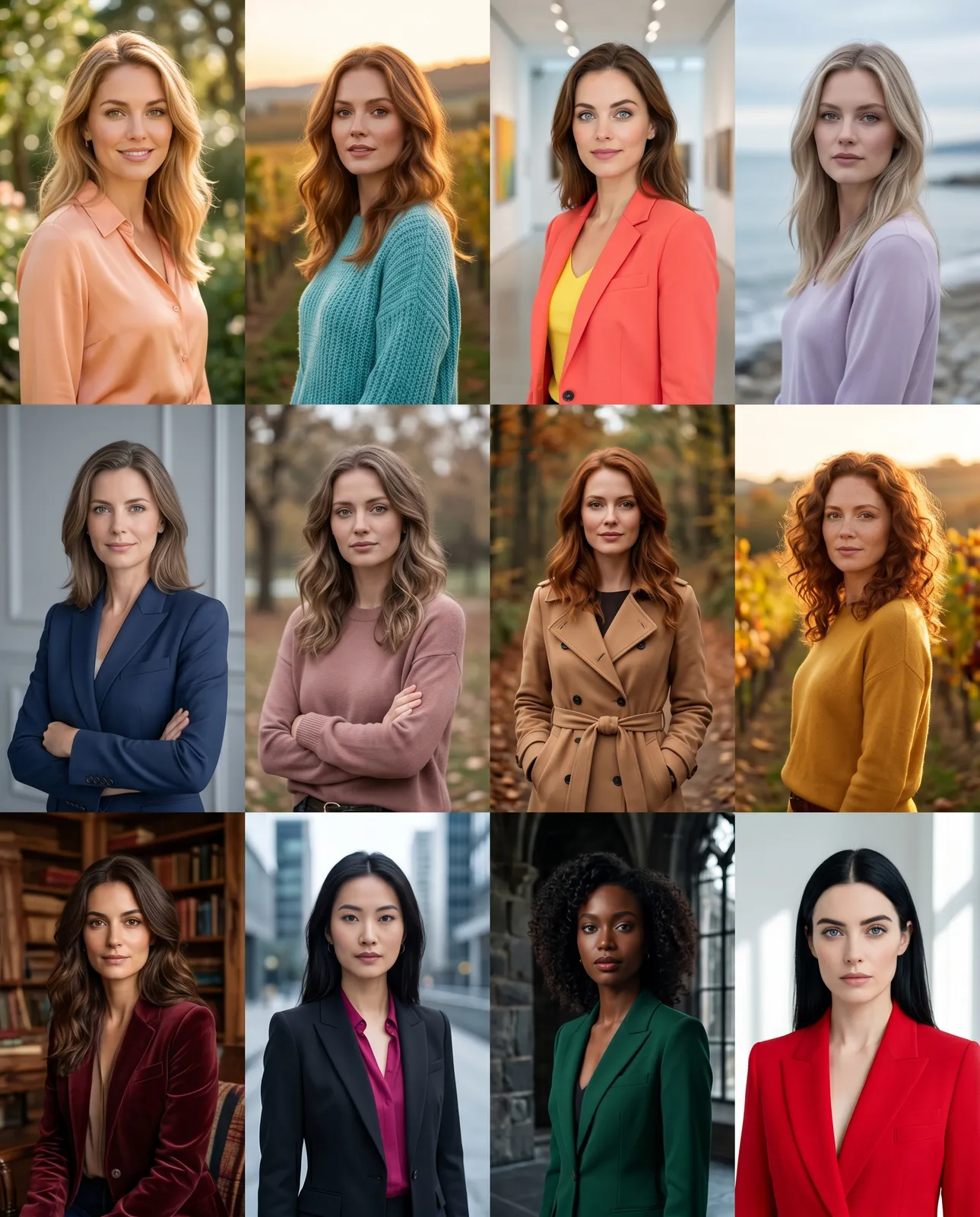
The twelve colour seasons explained: which one are you?
A complete, plain-English guide to all twelve seasons, what they mean, and how to recognise them.
The twelve-season colour analysis system is the most widely used framework for identifying personal colour palettes. If you have ever seen someone online confidently declaring they are a "Soft Summer" or a "Clear Spring," this is the system they are using.
Here is a complete guide to all twelve seasons: what they are, how to identify them, and what they mean for how you dress.
How the twelve seasons are organised
The system divides human colouring along three axes:
Temperature: warm (yellow, golden, peachy base) or cool (pink, blue, ashy base). This is the most fundamental division.
Depth: light, medium, or dark. How deep is your overall colouring?
Saturation: clear (vivid, high-contrast) or muted (soft, blended). How much contrast and intensity is in your natural features?
The twelve seasons are the twelve combinations of these variables that exist across the full range of human colouring. Every person belongs to one of them.
The Spring Seasons
Spring seasons are warm and relatively clear. The colours are fresh, vivid, and warm-based: nothing muted or heavy.
Light Spring
Light Spring is the lightest and most delicate of the spring seasons. Warm but very gentle, with a freshness and airiness to the colouring. Light Spring people tend to have fair or light skin with a warm or peachy quality, light golden or strawberry blonde hair, and light eyes (often blue, green, or soft hazel). The palette is light, warm, and clear: peach, soft coral, warm ivory, light aqua, butter yellow, mint, rose gold.
Warm Spring (True Spring)
Warm Spring is the warmest and most golden of the spring seasons. Colouring is vivid, warm, and clear with a fresh energy. Warm Spring people often have golden, peachy, or freckled skin, warm or reddish hair, and green or golden-brown eyes. The palette is bright and warm: warm coral, turquoise, golden yellow, camel, peachy orange, warm olive, bright ivory.
Clear Spring (Bright Spring)
Clear Spring is the most vivid and high-contrast of the spring seasons, sitting at the boundary with winter. The colouring has warmth but with a striking clarity and contrast. Clear Spring people tend to have a warm but clear complexion with defined features, often with dark eyes or bright eyes against warm skin. The palette is vivid and warm: bright coral, clear turquoise, vivid warm pink, clear warm green, true red, bright ivory.
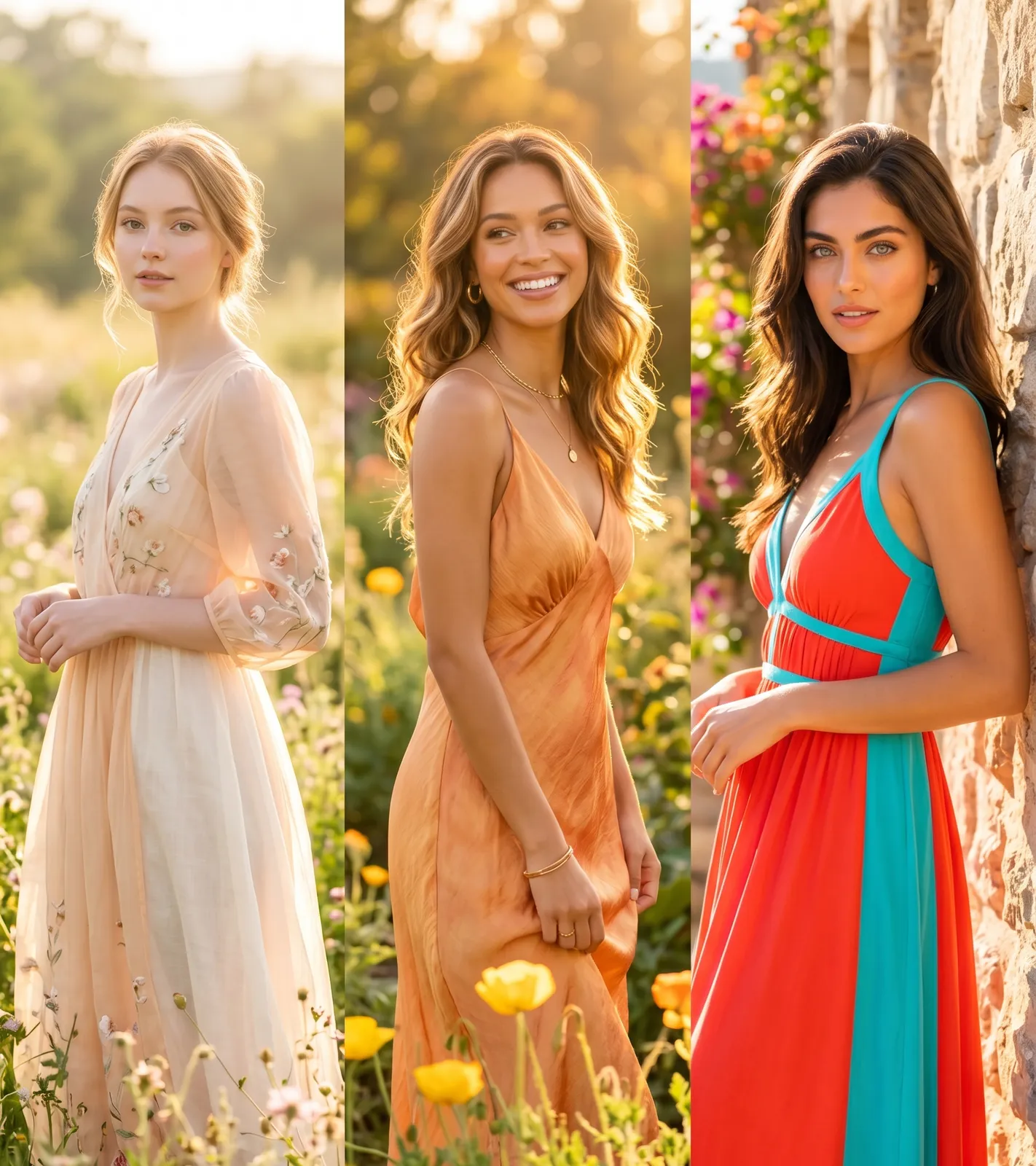
The Summer Seasons
Summer seasons are cool and muted. The colours are composed, quiet, and cool-based: never warm or vivid.
Light Summer
Light Summer is the lightest of the summer seasons. Cool but gentle and airy. Light Summer people tend to have fair, cool skin with a delicate quality, ash blonde or light cool brown hair, and light eyes (often grey-blue, cool grey, or soft blue). The palette is light, cool, and delicate: powder blue, lavender, soft blush, cool mint, pale silver, light rose, ice pink.
Cool Summer (True Summer)
Cool Summer is the most purely cool of the summer seasons. The colouring is muted and cool throughout, with medium depth. Cool Summer people tend to have cool, slightly ashy skin, cool medium brown or ash blonde hair, and grey or cool blue eyes. The palette is muted and cool: dusty rose, slate blue, soft raspberry, mauve, dove grey, cool lavender, faded denim.
Soft Summer
Soft Summer sits at the boundary with autumn, sharing the muted quality of summer with some of the warmth of autumn. The colouring is blended, soft, and neither strongly warm nor strongly cool. Soft Summer people tend to have muted, slightly ambiguous colouring with no strong warm or cool dominance. The palette is muted and composed: dusty mauve, sage, cool taupe, misty rose, smoky lavender, powder blue, pewter.
The Autumn Seasons
Autumn seasons are warm and muted or rich. The colours are earthy, grounded, and warm-based: never cool or pastel.
Soft Autumn
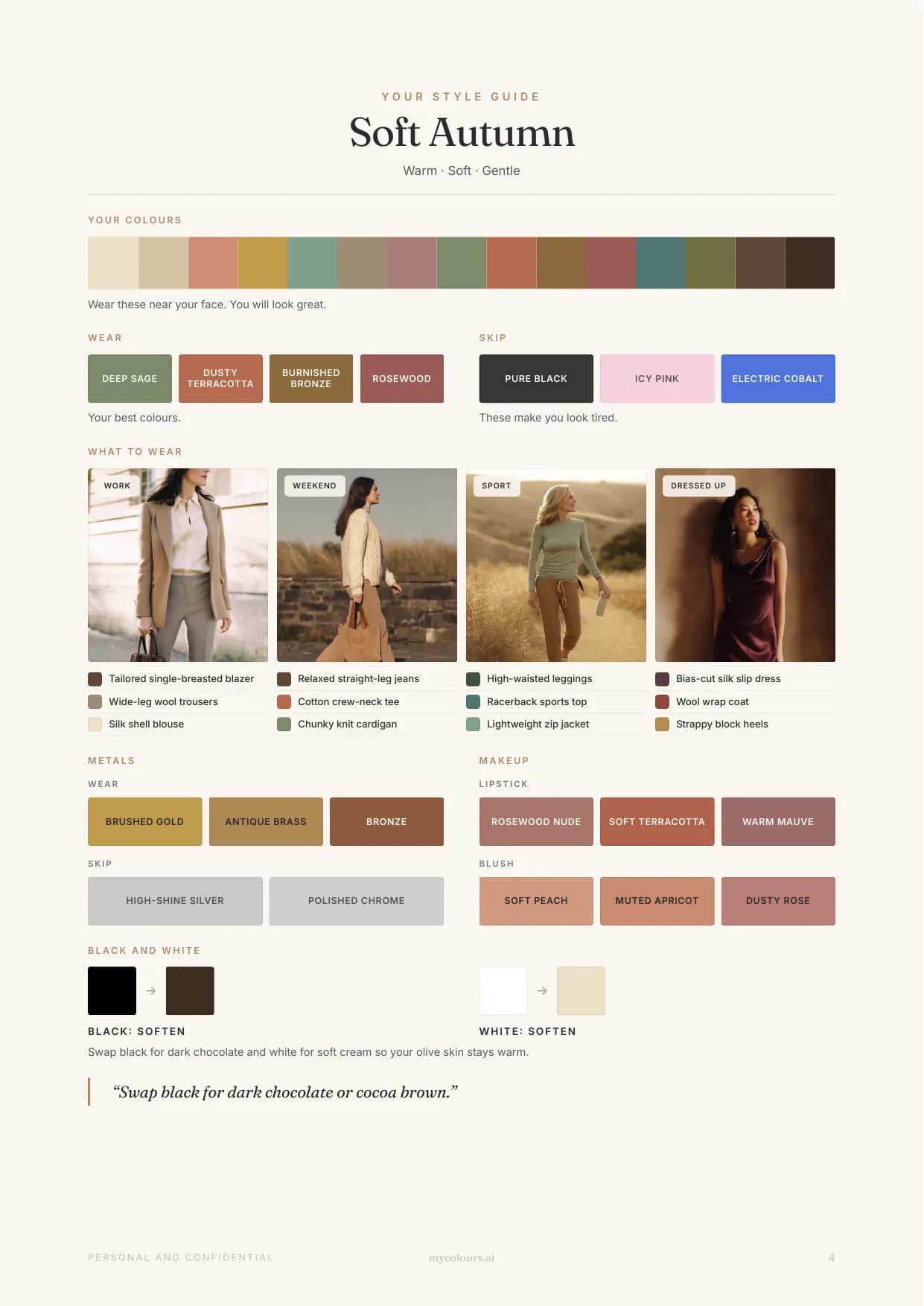
Soft Autumn sits at the boundary with summer, sharing some of the summer muting with the warmth of autumn. The colouring is gentle and blended, with warm but not vivid undertone. Soft Autumn people tend to have muted, warm-leaning colouring with medium depth and no strong contrast. The palette is muted and warm: muted olive, warm taupe, dusty terracotta, soft camel, sage brown, warm mushroom, muted gold.
Warm Autumn (True Autumn)
Warm Autumn is the richest and most purely warm of the autumn seasons. The colouring has a strong golden or earthy warmth and real depth. Warm Autumn people tend to have warm, often freckled skin with a golden quality, rich auburn or warm brown hair, and brown or warm hazel eyes. The palette is rich and earthy: rust, warm olive, mustard, copper, deep teal, pumpkin, warm brown.
Deep Autumn
Deep Autumn sits at the boundary with winter, sharing the depth of winter with the warmth of autumn. The colouring is dark, warm, and rich with high depth. Deep Autumn people tend to have warm, deep skin, dark hair, and dark eyes with real richness and presence. The palette is deep and earthy: forest green, deep burgundy, chocolate brown, dark olive, deep teal, rich copper, warm black.
The Winter Seasons
Winter seasons are cool and clear. The colours are vivid, high-contrast, and cool-based: nothing muted or warm.
Cool Winter (True Winter)
Cool Winter is the most purely cool and clear of the winter seasons. The colouring is cool throughout with strong contrast and clarity. Cool Winter people tend to have cool skin (which can range from very fair to very deep), cool dark hair, and cool or strikingly clear eyes. The palette is clear and cool: true blue, magenta, emerald, pure white, cobalt, ice pink, black.
Deep Winter
Deep Winter sits at the boundary with autumn, sharing the depth of autumn with the cool clarity of winter. The colouring is deep, dark, and cool with high contrast. Deep Winter people tend to have deep, high-contrast colouring: dark hair, cool or neutral skin, and dark or strikingly light eyes against dark features. The palette is deep and cool: midnight navy, crimson, amethyst, gunmetal, ultra black, deep cobalt, icy white.
Clear Winter (Bright Winter)
Clear Winter sits at the boundary with spring, sharing the vivid clarity of spring with the cool base of winter. The colouring is high-contrast and striking with a cool undertone. Clear Winter people tend to have very clear, bright colouring with strong contrast between features. The palette is vivid and cool: fuchsia, electric blue, true red, clear black, pure white, vivid violet, bright emerald.
The author's perspective
One thing I want to say about this system: it is a map, not a cage. The twelve seasons describe the full range of human colouring with remarkable accuracy, but every person within a season is still an individual, and there is always variation within a palette.
I also think the naming system, which invites people to describe themselves as seasons, can create the impression that the goal is to identify the correct label. In my view, the label matters much less than the understanding. What season you are named is less important than understanding your undertone, your depth, and your saturation level, and knowing how to apply that to actual choices. The name is a useful shorthand. The knowledge is what changes things.
Questions, answered
A professional colour analysis identifies your season by assessing undertone, depth, and saturation in combination. mycolours.ai does this from two selfies, producing your exact season and a 19-colour personal palette. Start at mycolours.ai.
Some people sit near the boundary between adjacent seasons, and this is normal. A thorough analysis will identify the best fit and explain where the boundaries are.
Yes. The twelve seasons account for the full range of undertone, depth, and saturation combinations across all human colouring types. Everyone has a season, though the boundaries are not always sharp.
No. Skin tone (fair, medium, deep) is only one component of season. Season also includes undertone and saturation, which skin tone alone does not indicate.
No. Season is determined by your natural colouring, not your current hair colour. Your undertone, natural hair depth, and eye colour are the relevant variables. Dyed hair does not change your season.
Melissa O'Neill
Style Editor at mycolours.ai
Melissa O'Neill is the style editor at mycolours.ai. She started her career on the Paul Smith concession at Harrods, where she learned that the difference between looking ordinary and looking incredible often comes down to colour, not cost. She has since built and run luxury boutique hotels, businesses where every detail, from the linen shade to the lighting warmth, was chosen to make people feel something. She started mycolours.ai because she believes the tools to look and feel your best should not cost £300 or require a stylist on speed dial.
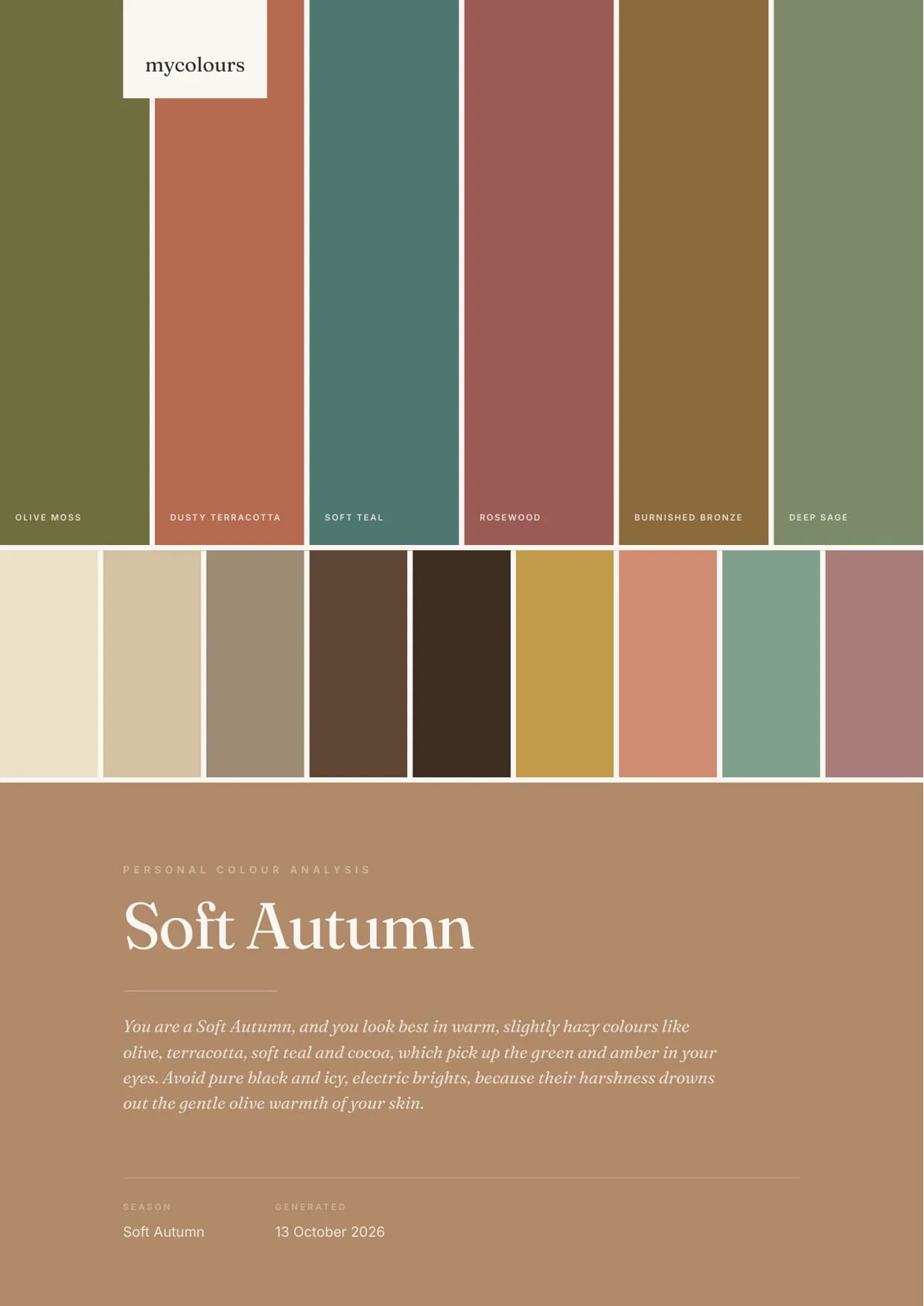
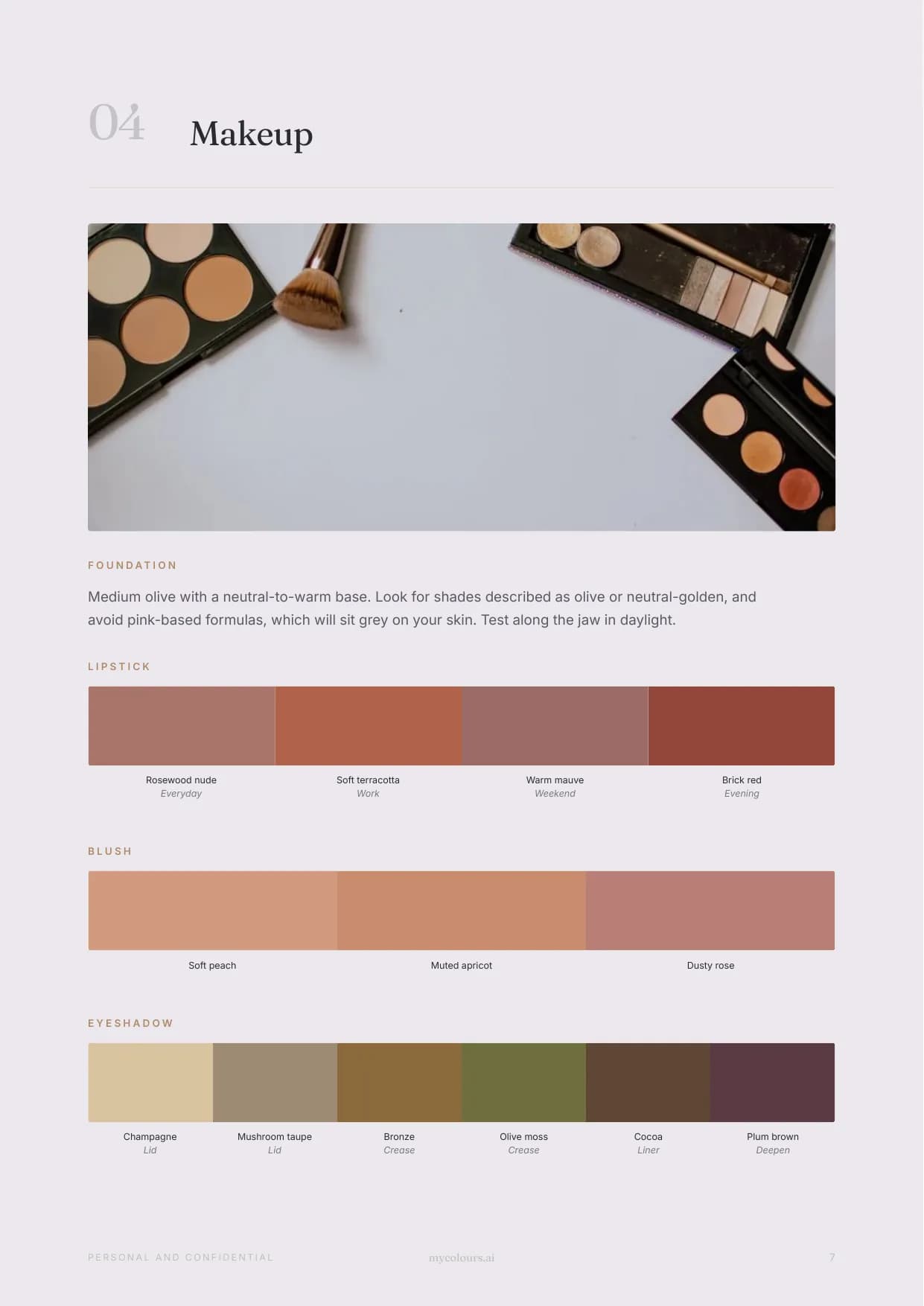
A real report, page by page.
These pages come from a genuine sample report, made by the same analysis that will read your photos. Yours is built from your own two selfies.
- Your season, and why, read from your skin, hair and eyes
- Your 19-colour palette, every colour named, with its code
- Makeup, hair colour and wardrobe guidance
- A PDF report to keep
More on colour
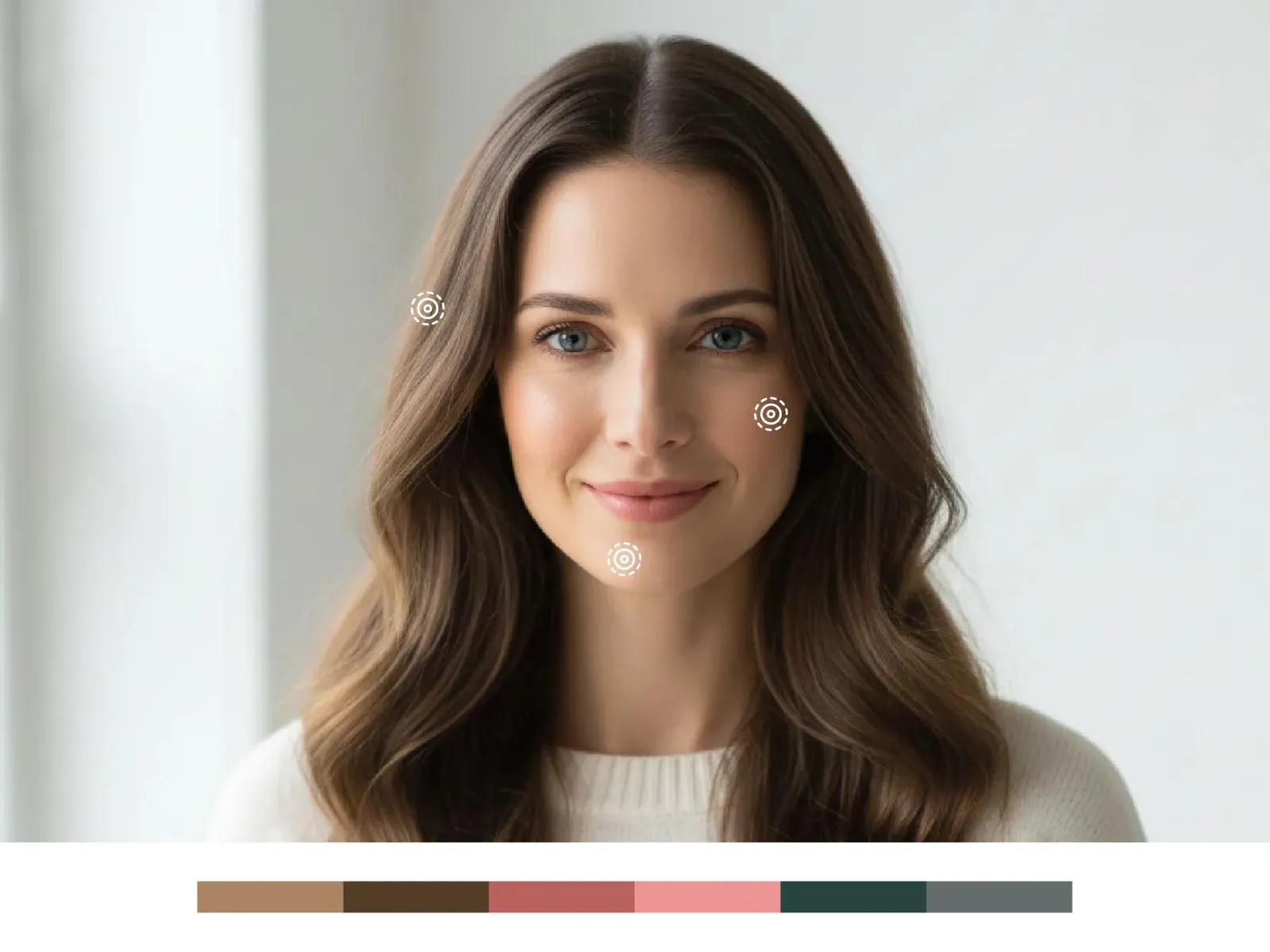
What is colour analysis? A plain-English guide.
Colour analysis identifies the precise palette of colours that harmonise with your undertone, depth, and saturation. Here is how it works and why it matters.
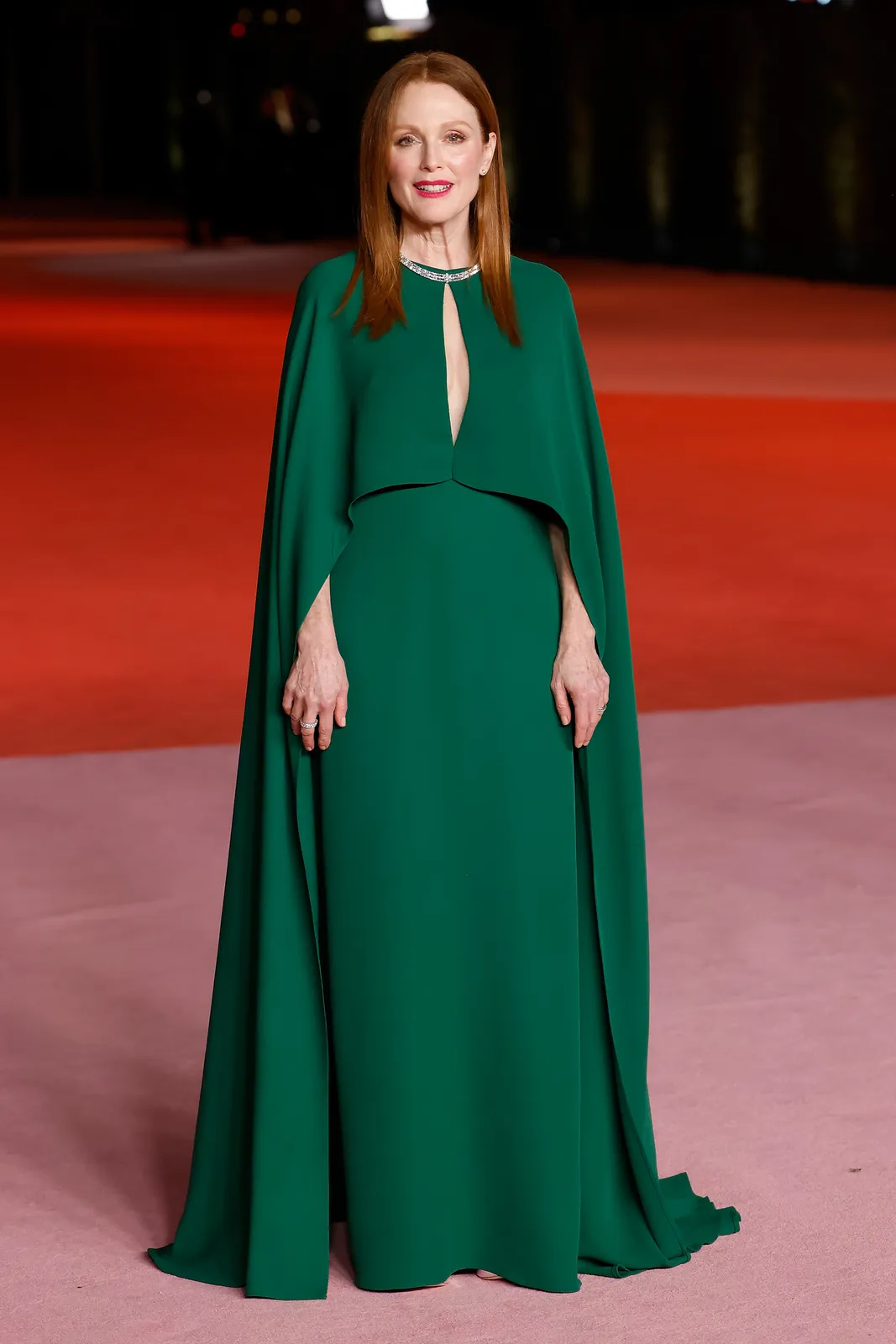
What Julia Roberts, Julianne Moore and Amy Adams have in common, and why it matters for your wardrobe
Julia Roberts, Julianne Moore and Amy Adams are all warm-toned, but belong to different seasons. Understanding why reveals something fundamental about how colour actually works.
Why do some colours make me look tired?
A perfectly nice outfit can still leave you looking drained. Here is how undertone, depth and contrast decide whether a colour lifts your face or flattens it.
Your exact colours, from two selfies.
mycolours reads your skin, hair, and eyes and returns your colour season, a 19-colour palette, makeup matches, hair guidance, and a capsule wardrobe in a few minutes, for $9.99.