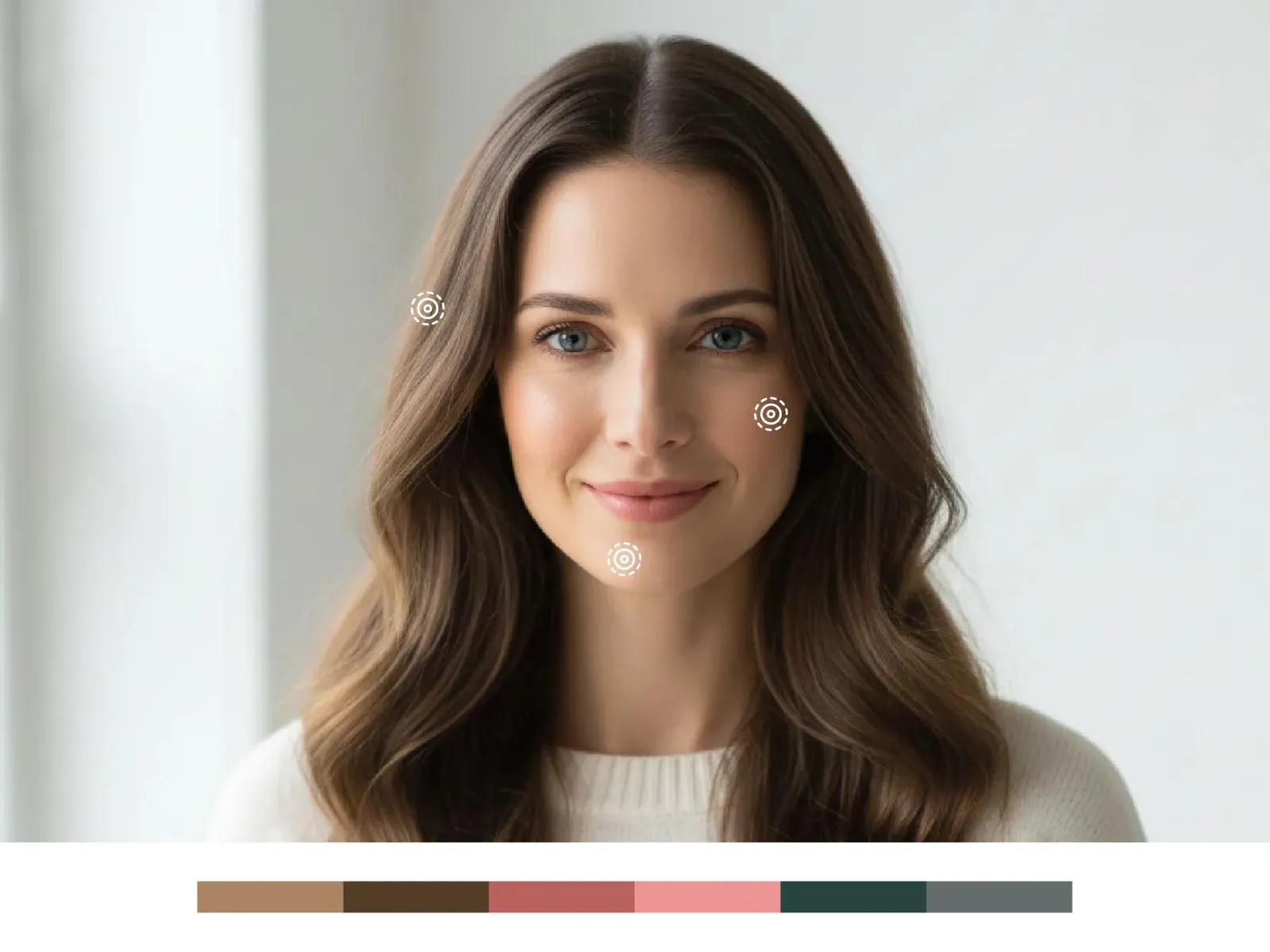
What is colour analysis? A plain-English guide.
No jargon. No draping mysticism. Just a clear explanation of what it is and how it works.
Colour analysis is having a moment. It is all over social media, it appears in style conversations that would never have used the phrase five years ago, and everyone seems to have an opinion about which season they are. But underneath the discourse, a lot of people still aren't entirely sure what it actually is or how it works.
This is a plain-English explanation.
What is colour analysis?
Colour analysis is a method for identifying which colours work best with your specific, individual colouring. Not colours that are generally fashionable, not colours that suit a vague category like "warm skin tones," but the precise palette of colours that harmonise with your undertone, your depth, and the quality of your features.
The result of a colour analysis is a personal colour palette: a set of colours that make your skin look clearer, your features more defined, and your overall appearance more alive and coherent whenever you wear them.
Where did colour analysis come from?
The modern seasonal system was developed in the early 1980s, largely popularised by Carole Jackson's book "Color Me Beautiful." The underlying colour theory is older, drawing on Bauhaus colour principles from Johannes Itten, who observed that students instinctively chose colours that harmonised with their own natural colouring.
The system has been refined significantly since the 1980s. The original four-season model has been expanded to twelve seasons to account for the full range of human colouring more accurately.
How does colour analysis work?
Colour analysis works by identifying three key characteristics in your natural colouring and matching them to a colour palette that shares those characteristics.
Temperature: Your skin, hair, and eyes have a dominant undertone that is warm (yellow, golden, or peachy), cool (pink, blue, or ashy), or neutral. The colours that suit you share this undertone. Wearing colours that conflict with your undertone creates a subtle but visible clash that reads as tiredness, dullness, or being washed out.
Depth: Your overall colouring has a depth from very light to very dark. Colours work best when their depth is broadly proportionate to yours. Very dark, saturated colours on very light colouring can overpower. Very light, pale colours on very deep colouring can disappear.
Saturation: Your features have either a clear, high-contrast quality or a softer, more blended quality. Clear, vivid colours suit clear colouring. Muted, blended colours suit softer colouring. Getting this wrong creates either an overwhelming effect (too vivid for soft colouring) or a washed-out one (too muted for clear colouring).
When all three variables are right simultaneously, the result is a colour that looks as though it was chosen specifically for you, because it was.
What are the twelve seasons?
The twelve-season system organises all palettes into four seasonal families, each divided into three sub-types:
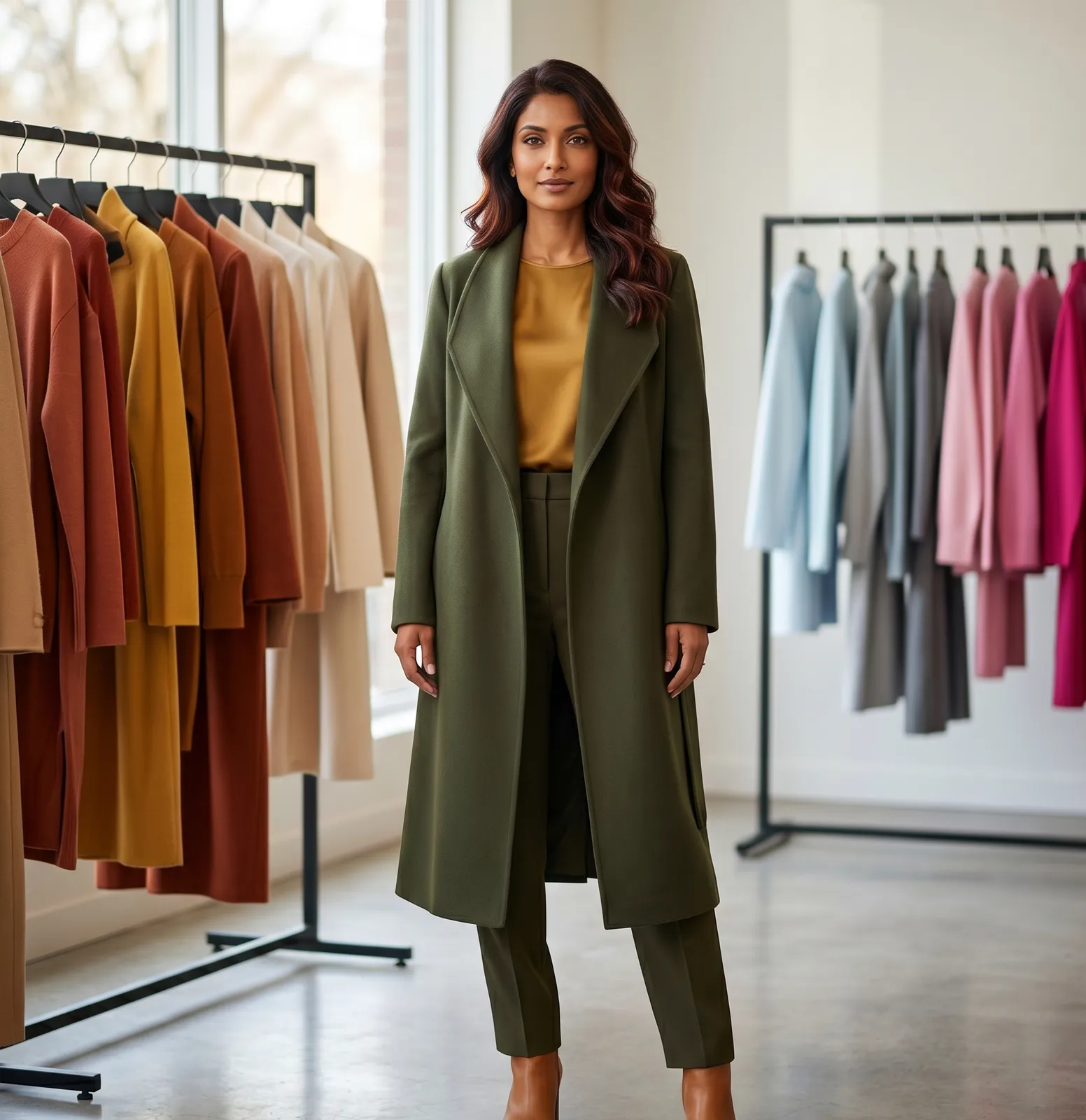
Spring: warm, clear, and relatively light. Sub-seasons are Light Spring, Warm Spring, and Clear Spring.
Summer: cool and muted, ranging from light to medium. Sub-seasons are Light Summer, Cool Summer, and Soft Summer.
Autumn: warm and muted or rich, ranging from medium to deep. Sub-seasons are Soft Autumn, Warm Autumn, and Deep Autumn.
Winter: cool, clear, and often high-contrast. Sub-seasons are Cool Winter, Deep Winter, and Clear Winter.
Each sub-season has a specific palette of colours calibrated to that precise combination of temperature, depth, and saturation. Every person belongs to one of these twelve types, though some people sit closer to the boundary between two.
What happens in a traditional colour analysis?
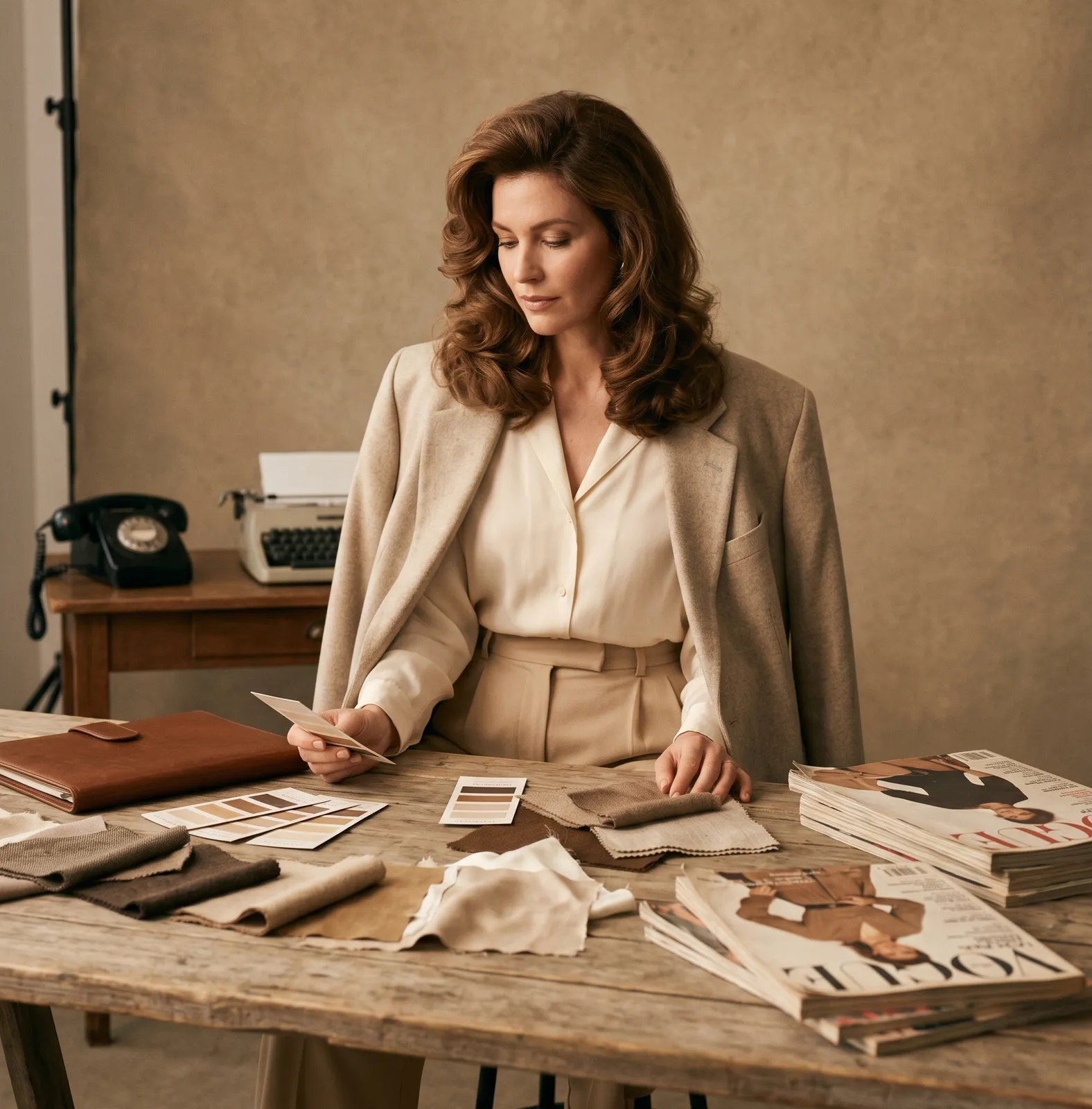
In a traditional in-person session, a trained consultant drapes fabric swatches in different colours next to your bare face in natural light. The consultant observes what happens to your skin under each colour: where shadows increase or decrease, where your complexion looks clearer or duller, where your features look more or less defined.
The effect is more visible than most people expect. The difference between a colour that works and one that doesn't is not subtle when observed directly, and most people can see it themselves during the session.
The session typically ends with a confirmed season, a palette, and guidance on how to apply the results to clothing, makeup, and hair.

The author's perspective
I want to say something about what colour analysis is for, beyond the practical mechanics of it. In my experience, the most powerful thing it does is not produce a list of colours. It is to give someone a specific, grounded understanding of their own appearance.
Most people relate to their own colouring in a vague, approximate way. They know they suit some things better than others. They have a sense that certain colours feel more like them. What colour analysis does is make that intuition precise. It takes something you already knew imperfectly and shows it to you clearly.
I believe every person has a natural beauty specific to them, and that colour is one of the most direct routes to making that visible. Understanding your season is not about conforming to a system. It is about understanding yourself well enough to make choices that are genuinely yours.
What does colour analysis include?
A complete colour analysis gives you:
Your season: which of the twelve types you are, and what that means for your colouring.
Your personal palette: the specific colours that work for your season, typically between 19 and 30 shades covering neutrals, accent colours, and statement colours.
Makeup guidance: the foundation undertones, lip colours, blush shades, and eyeshadow families that harmonise with your season.
Hair guidance: which hair colour directions work with your natural colouring and which work against it.
Wardrobe guidance: how to apply your palette to building a coherent, practical wardrobe.
How is colour analysis done online?
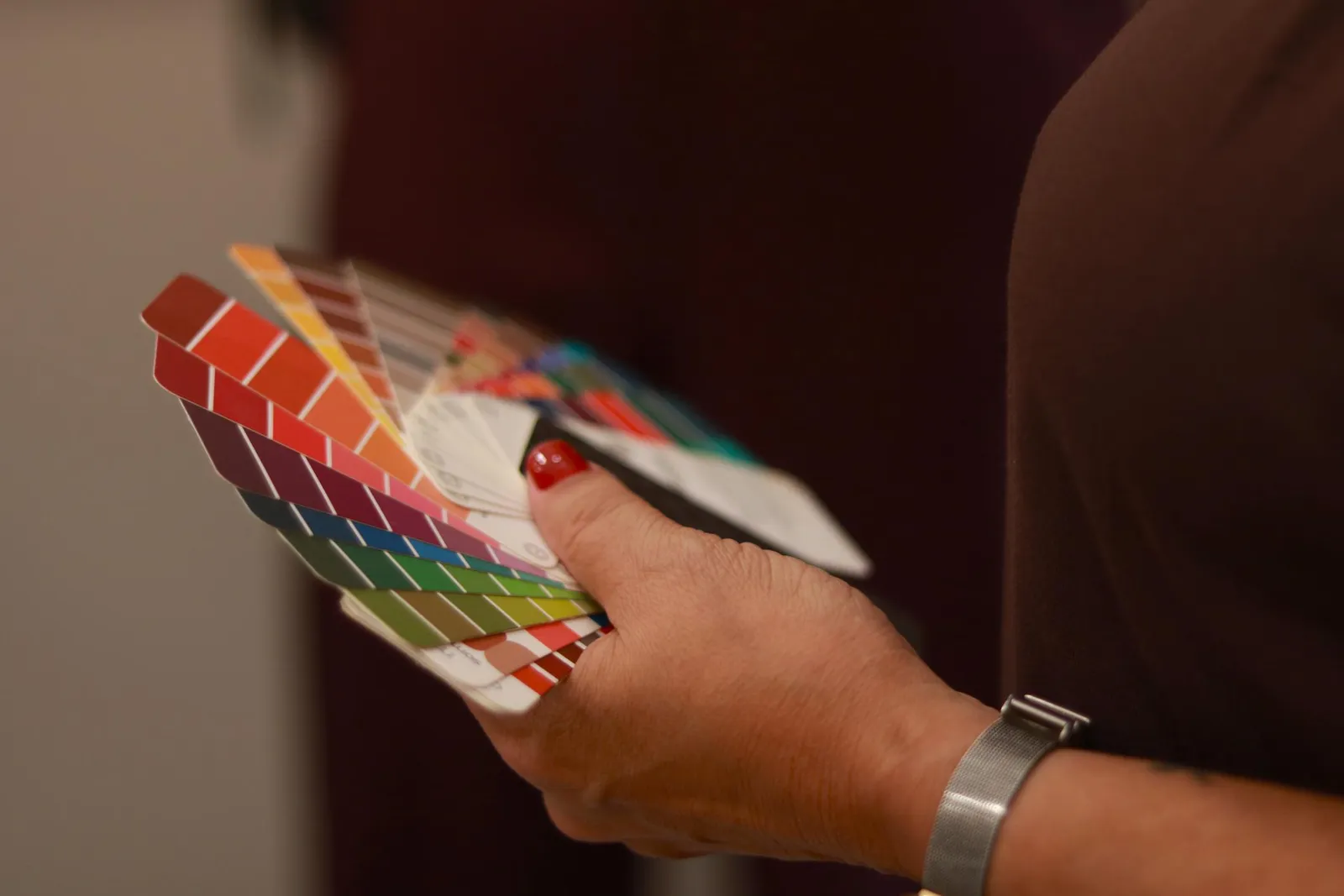
Traditional colour analysis is in-person and uses physical fabric swatches. Online analysis has developed significantly alongside AI technology.
The most basic online options are quizzes that ask you to describe your features and produce a season result. These vary in accuracy because they rely on self-reported information.
More sophisticated tools, like mycolours.ai, analyse your actual images rather than relying on descriptions. Built on professional colour consultancy expertise, mycolours.ai takes two selfies and produces your exact season, a 19-colour personal palette, makeup matches, hair guidance, and a 14-piece capsule wardrobe. For £7.99.
Questions, answered
Yes. The seasonal system applies to all skin tones, all ethnicities, and all hair and eye colours. It identifies undertone, depth, and saturation regardless of surface skin tone, which means it works accurately across the full range of human colouring.
Your season does not change. Your undertone is fixed for life. As your hair changes with age, your palette stays the same but some shades within it may become more or less useful.
No. Your palette is a guide, not a rule. Understanding your season gives you enough knowledge to make informed choices, including occasional choices outside the palette. The goal is clarity and confidence, not rigid compliance.
Some people do sit near the boundary between seasons, and this is normal. A thorough analysis will identify which season is the best fit and explain the boundary clearly. mycolours.ai accounts for this in the analysis.
mycolours.ai requires two selfies taken in natural light with no filter. The analysis then identifies your season, builds your palette, matches your makeup, and produces your capsule wardrobe. Start at mycolours.ai.
Melissa O'Neill
Style Editor at mycolours.ai
Melissa O'Neill is the style editor at mycolours.ai. She started her career on the Paul Smith concession at Harrods, where she learned that the difference between looking ordinary and looking incredible often comes down to colour, not cost. She has since built and run luxury boutique hotels, businesses where every detail, from the linen shade to the lighting warmth, was chosen to make people feel something. She started mycolours.ai because she believes the tools to look and feel your best should not cost £300 or require a stylist on speed dial.
A real report, page by page.
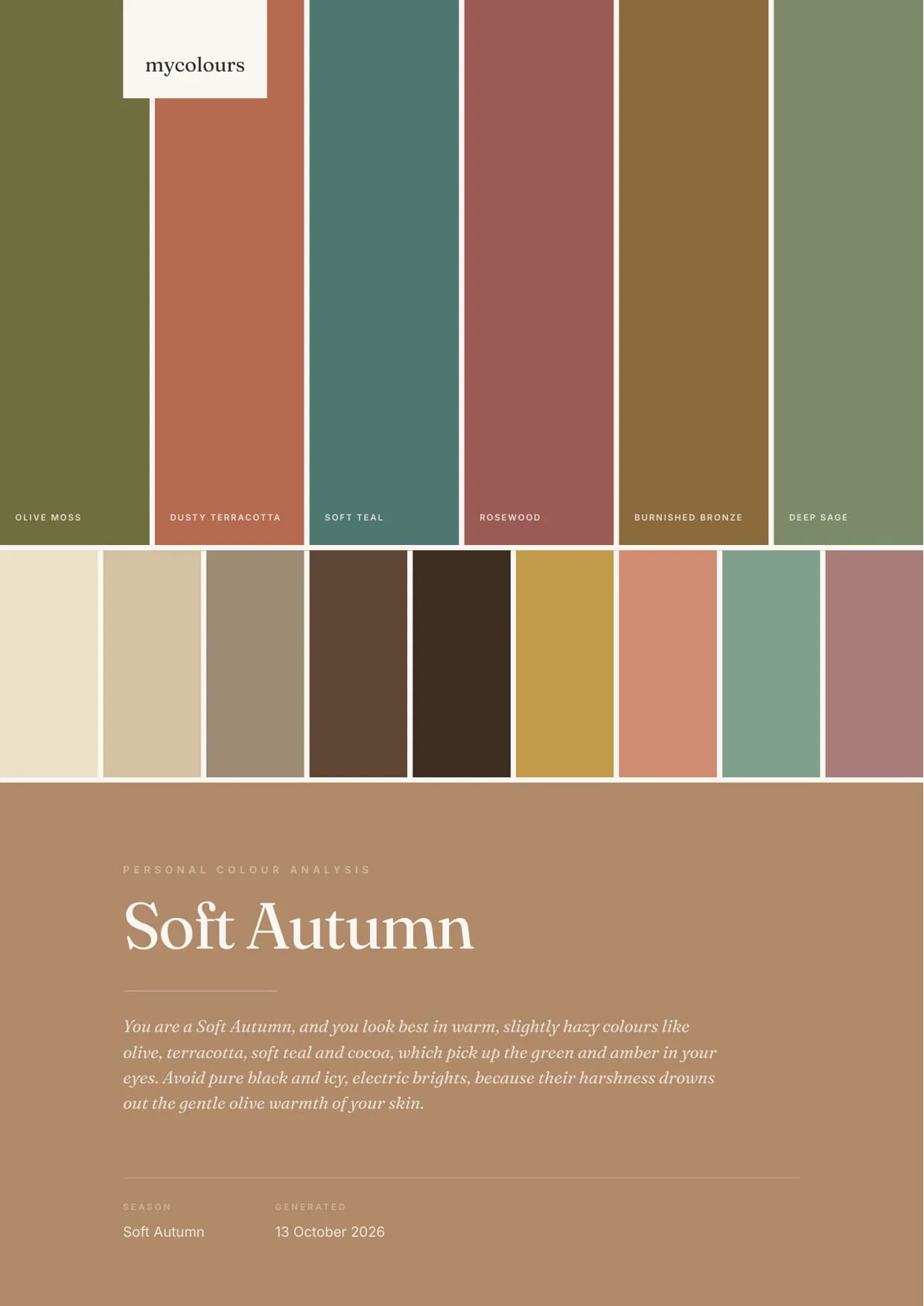
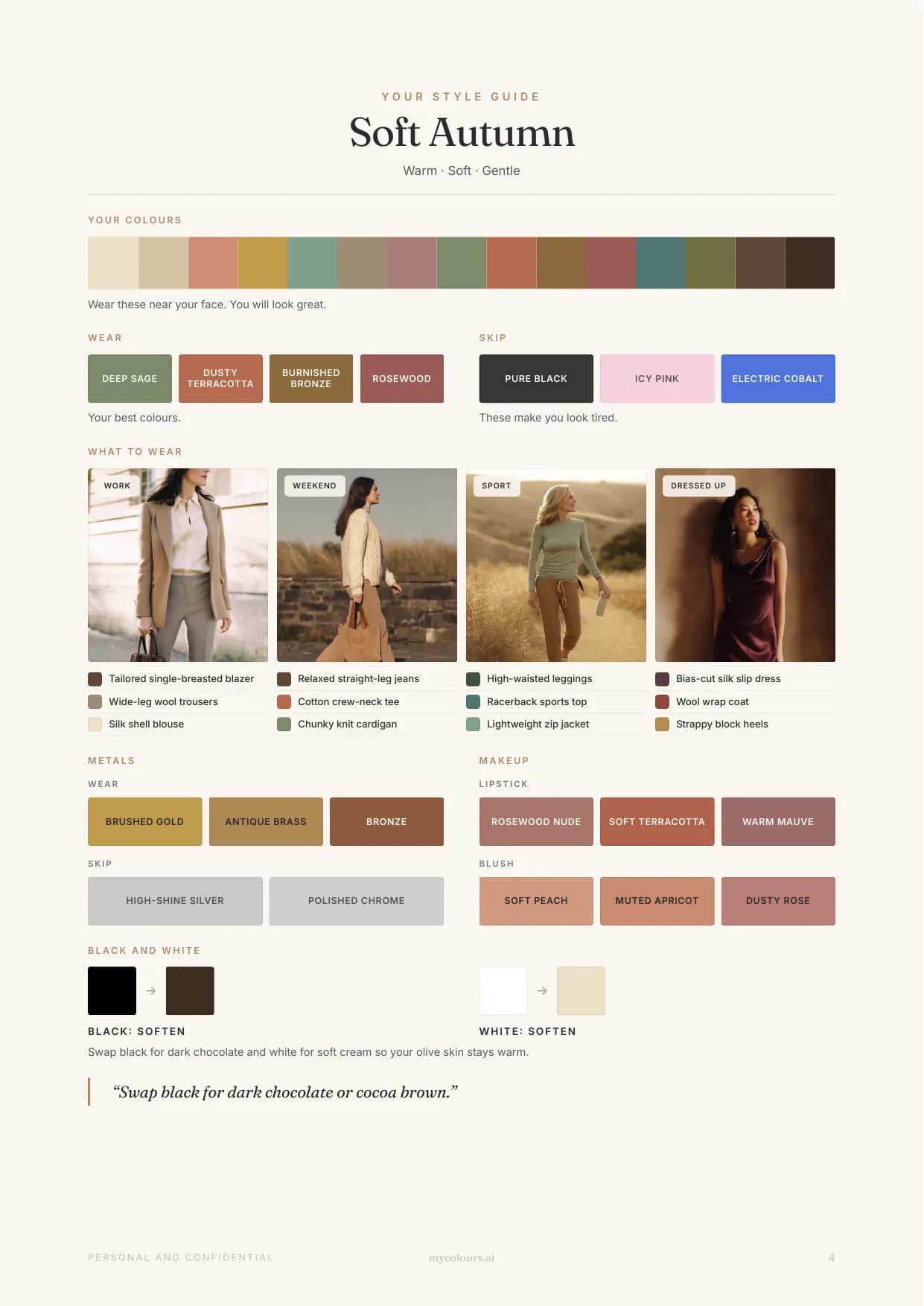
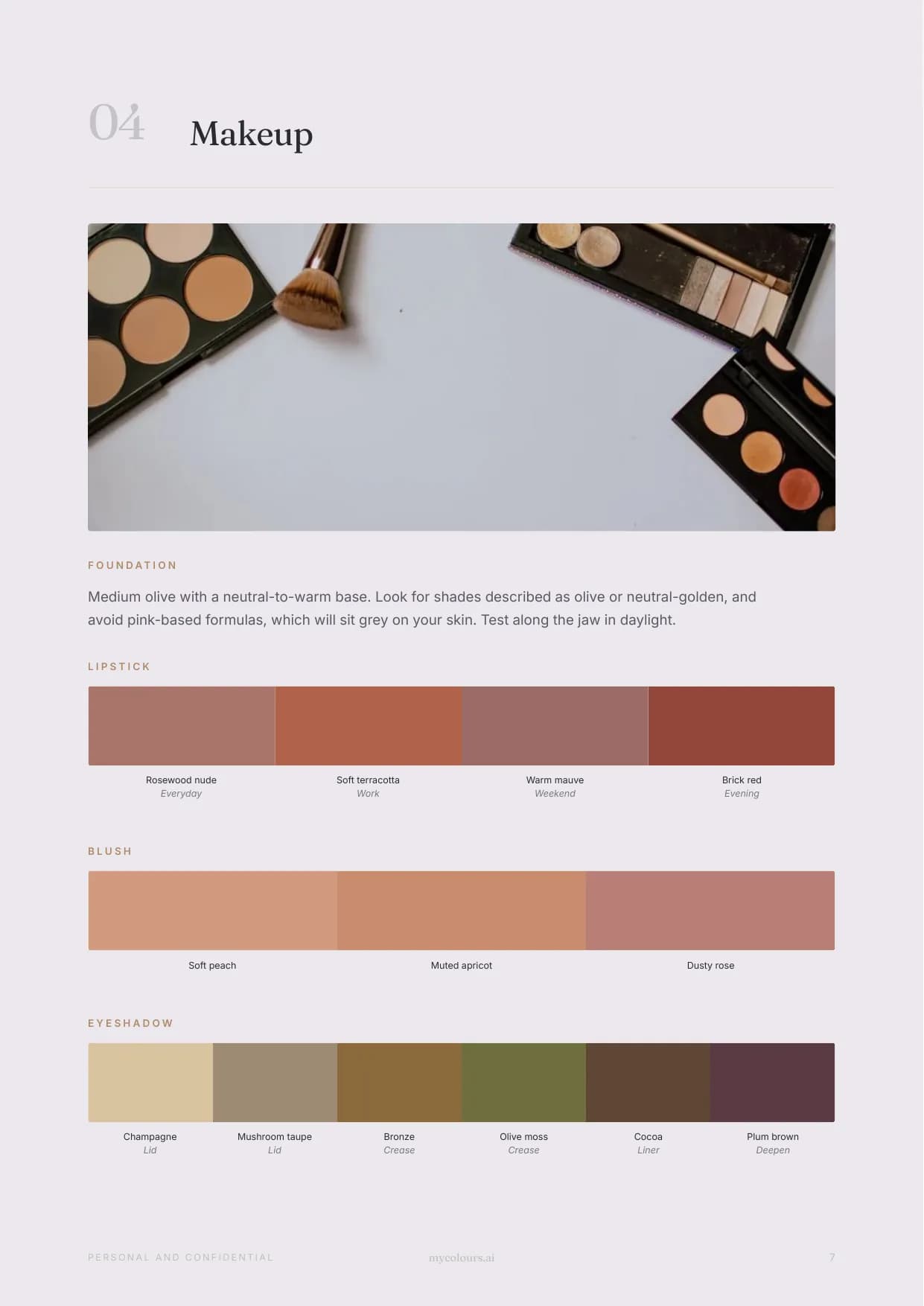
These pages come from a genuine sample report, made by the same analysis that will read your photos. Yours is built from your own two selfies.
- Your season, and why, read from your skin, hair and eyes
- Your 19-colour palette, every colour named, with its code
- Makeup, hair colour and wardrobe guidance
- A PDF report to keep
More on colour
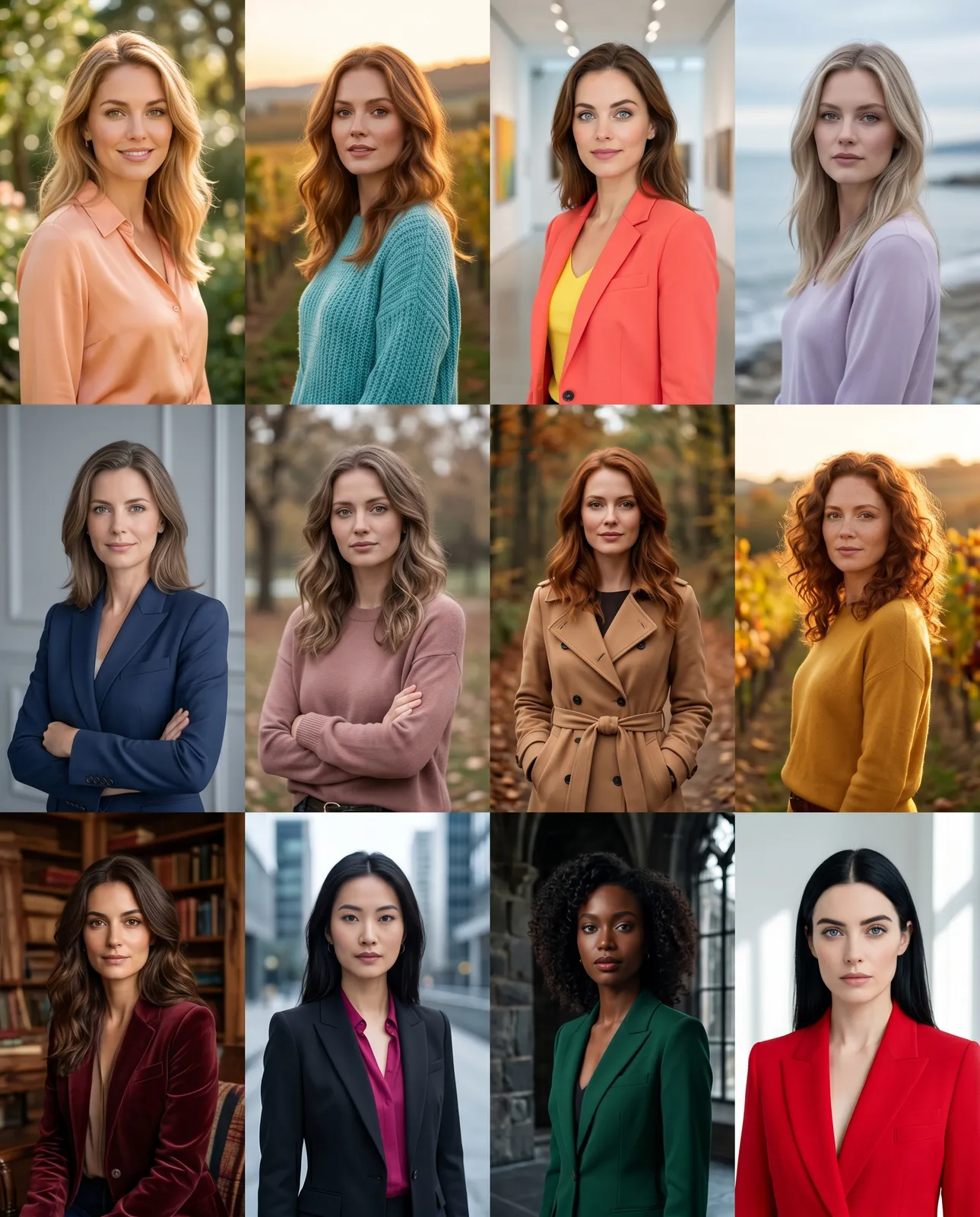
The twelve colour seasons explained: which one are you?
A plain-English guide to all twelve colour seasons: how the system works, what each season looks like, and how to identify which one you are.
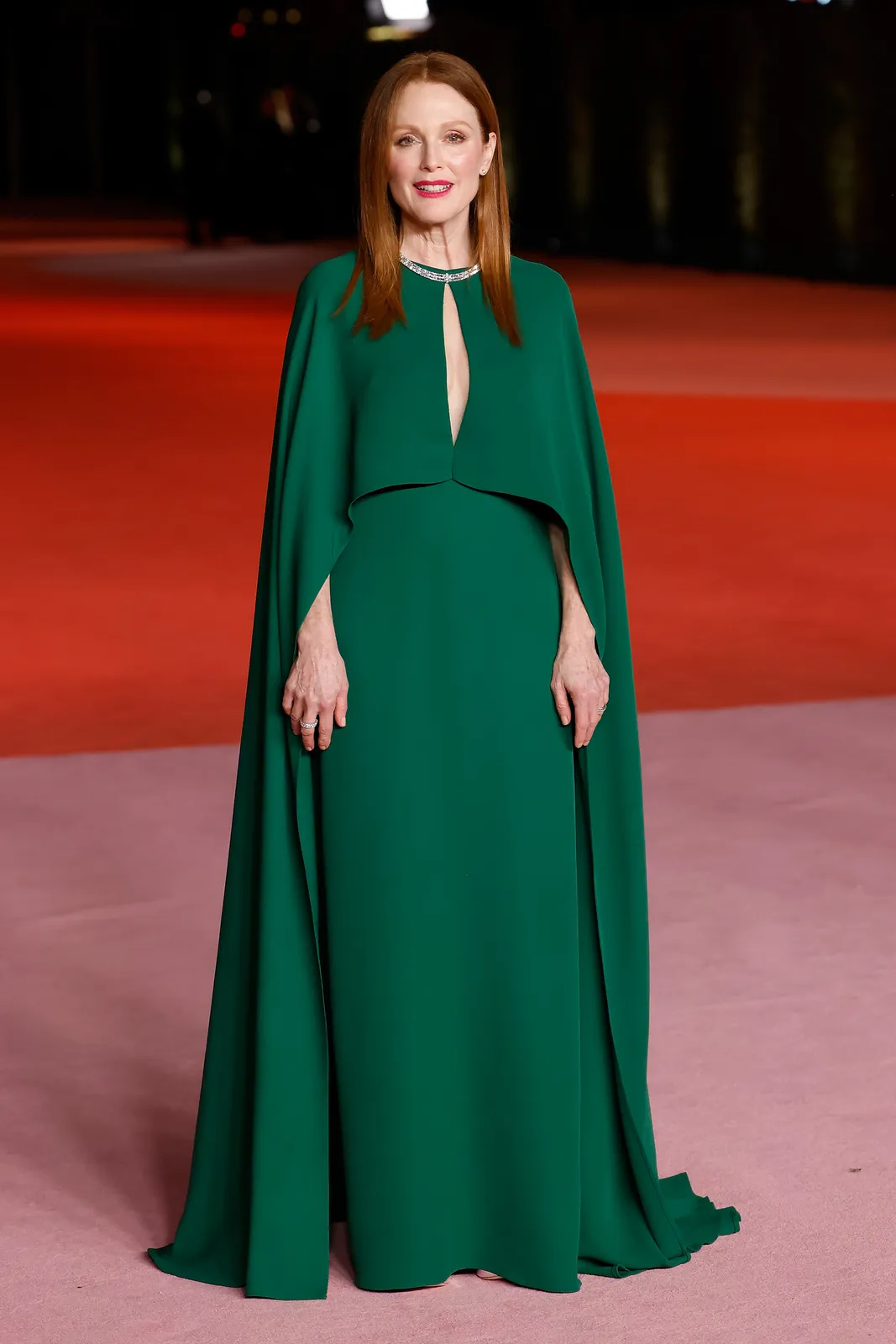
What Julia Roberts, Julianne Moore and Amy Adams have in common, and why it matters for your wardrobe
Julia Roberts, Julianne Moore and Amy Adams are all warm-toned, but belong to different seasons. Understanding why reveals something fundamental about how colour actually works.
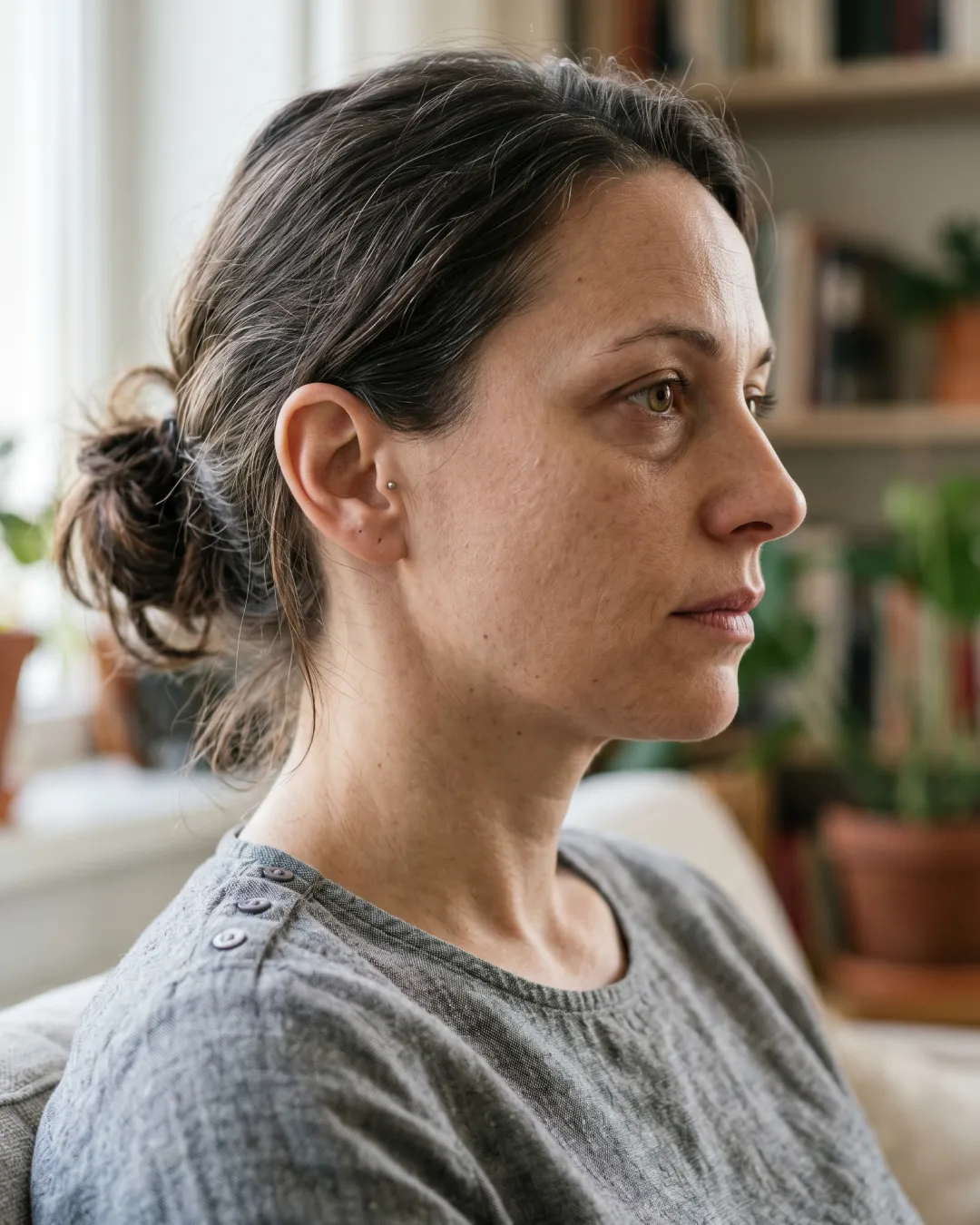
Why do some colours make me look tired?
A perfectly nice outfit can still leave you looking drained. Here is how undertone, depth and contrast decide whether a colour lifts your face or flattens it.
Your exact colours, from two selfies.
mycolours reads your skin, hair, and eyes and returns your colour season, a 19-colour palette, makeup matches, hair guidance, and a capsule wardrobe in a few minutes, for $9.99.