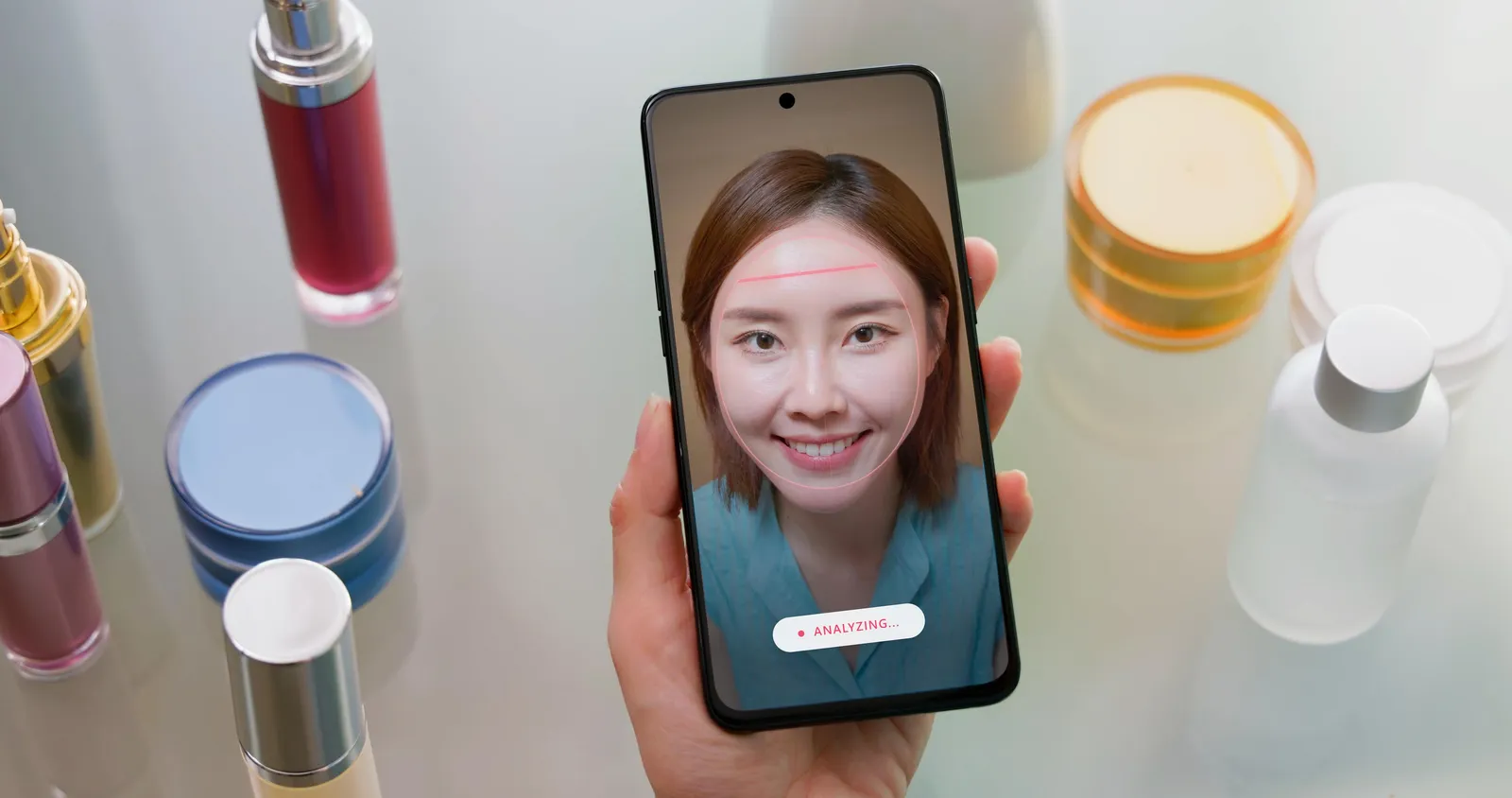
Can ChatGPT do my colour analysis? An honest answer.
The short answer is: partly. Here is what it gets right, where it falls short, and what to use instead.
If you have typed "what is my colour season?" into ChatGPT, you are not alone. As AI tools have become part of everyday life, colour analysis has become one of the more popular things people ask them to do. The results are interesting. Sometimes surprisingly good, sometimes confidently wrong.
Here is an honest breakdown of what general AI tools can and cannot do in this space.
What ChatGPT can do
ChatGPT and similar large language models have access to substantial information about colour theory, the seasonal colour analysis system, undertone, and how different colour characteristics interact with skin. When given a clear photo and a structured prompt, a capable AI can produce a reasonable season assessment.
It can describe the principles behind warm and cool undertones. It can explain the difference between the twelve seasons. It can give general guidance about which colour families tend to flatter which colouring types. For someone who has no access to any other resource, this is genuinely useful.
Where it falls short
The problems are significant enough to matter:
Inconsistency. General AI tools do not have a fixed analytical framework for colour analysis. Two people with identical colouring asking the same question on different days may receive different results, because the model is generating a response rather than applying a consistent system. This is a fundamental limitation for something that should produce a reliable, repeatable result.
No expertise behind the output. ChatGPT has read about colour analysis. It has not been trained by colour professionals, it does not apply a tested methodology, and it cannot replicate the judgment that comes from a trained consultant who has seen hundreds of different colouring types.
It cannot see what matters most. Even when given an image, AI tools assess visible characteristics in isolation. A trained colour analyst looks at how the undertone interacts with depth and saturation, and crucially, how the combination of all three characteristics determines which colours work. This triangulation is harder to replicate without a purpose-built system.
Confident errors. AI tools are prone to producing plausible-sounding results with authority, even when those results are wrong. In colour analysis, a confident wrong season is worse than no result at all, because it leads you toward an incorrect palette.
The author's perspective
I have a straightforward view on this. Using ChatGPT for colour analysis is a bit like using a general search engine to diagnose a medical symptom. You will get information. Some of it will be accurate and useful. But you are not getting the benefit of expertise, of a tested framework, or of someone who has actually seen this specific situation hundreds of times.
What I find more interesting is the underlying impulse. People turning to AI for colour analysis are doing so because they want access to expertise that has historically been expensive and inconvenient. That impulse is completely right. The question is just whether a general-purpose AI is the best tool to answer it.
For me, the purpose of colour analysis has never been to produce a label. It's to help someone understand their own colouring well enough to dress with intention. A season name without the supporting knowledge, the palette, the makeup shades, the understanding of why, doesn't achieve that.
What is the difference between a general AI tool and a purpose-built one?
mycolours.ai is built specifically for colour analysis, using a professional consultancy framework that is consistent, tested, and expert-informed.
It does not generate a response based on what it has read about colour theory. It applies a defined analytical system to your actual images: assessing undertone, depth, and saturation in combination, and producing a result that is specific to your colouring rather than a plausible generalisation.
The output is also substantially more useful than a season name. You receive a 19-colour personal palette, makeup colour matches, hair guidance, and a 14-piece capsule wardrobe. The knowledge is immediately applicable rather than requiring further interpretation.
And it costs £7.99.
Should you try ChatGPT first?
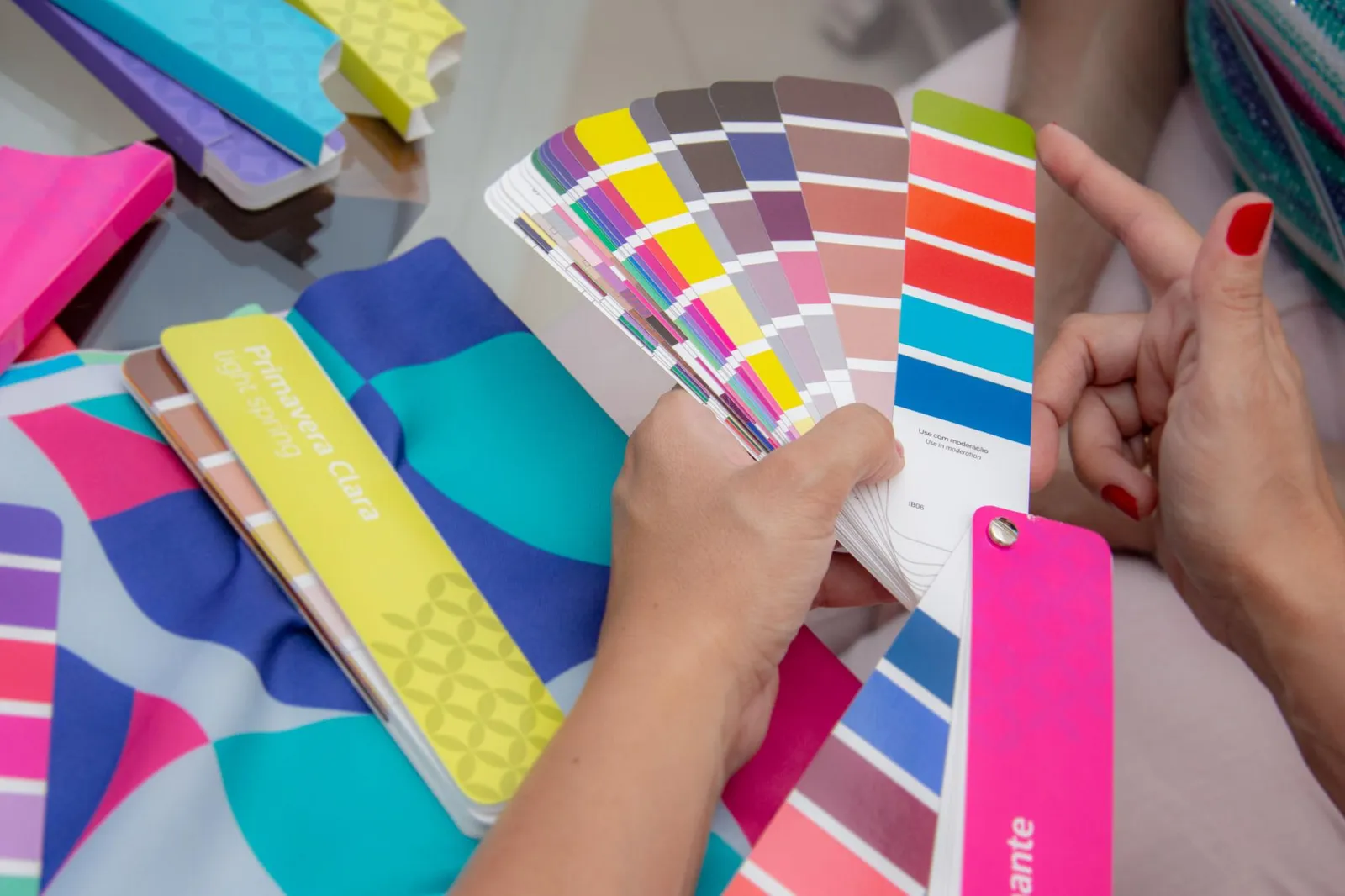
If you're curious and want a rough sense of your season before committing to anything, there is no harm in trying a general AI tool. Go in knowing its limitations: treat the result as a starting hypothesis rather than a confirmed answer, and test it against your actual wardrobe and the natural light test.
If the result resonates and you want it confirmed accurately with a full palette and practical application, mycolours.ai is the next step.
Questions, answered
It can make an assessment from a photo or from your description of your features. The accuracy is variable and the result is not generated from a consistent framework. It is a reasonable starting point but not a reliable final answer.
Yes. mycolours.ai uses AI as part of an expert-built colour analysis system. Unlike general AI tools, it applies a defined professional framework consistently and produces a full set of practical outputs rather than a conversation-based response.
Trust the purpose-built system. mycolours.ai applies a consistent expert framework to your actual images. General AI tools generate responses that can vary with phrasing, image quality, and the model's current state. Where they conflict, the specialist tool will be more reliable.
No. Filters alter the colour information in the image, which directly affects the accuracy of the analysis. Submit clear, unfiltered images in natural light for the best result.
mycolours.ai is built on the same professional framework used in in-person consultations. The practical outcome, including season identification, personal palette, and makeup matching, is equivalent for the vast majority of users. Start your analysis at mycolours.ai.
Melissa O'Neill
Style Editor at mycolours.ai
Melissa O'Neill is the style editor at mycolours.ai. She started her career on the Paul Smith concession at Harrods, where she learned that the difference between looking ordinary and looking incredible often comes down to colour, not cost. She has since built and run luxury boutique hotels, businesses where every detail, from the linen shade to the lighting warmth, was chosen to make people feel something. She started mycolours.ai because she believes the tools to look and feel your best should not cost £300 or require a stylist on speed dial.
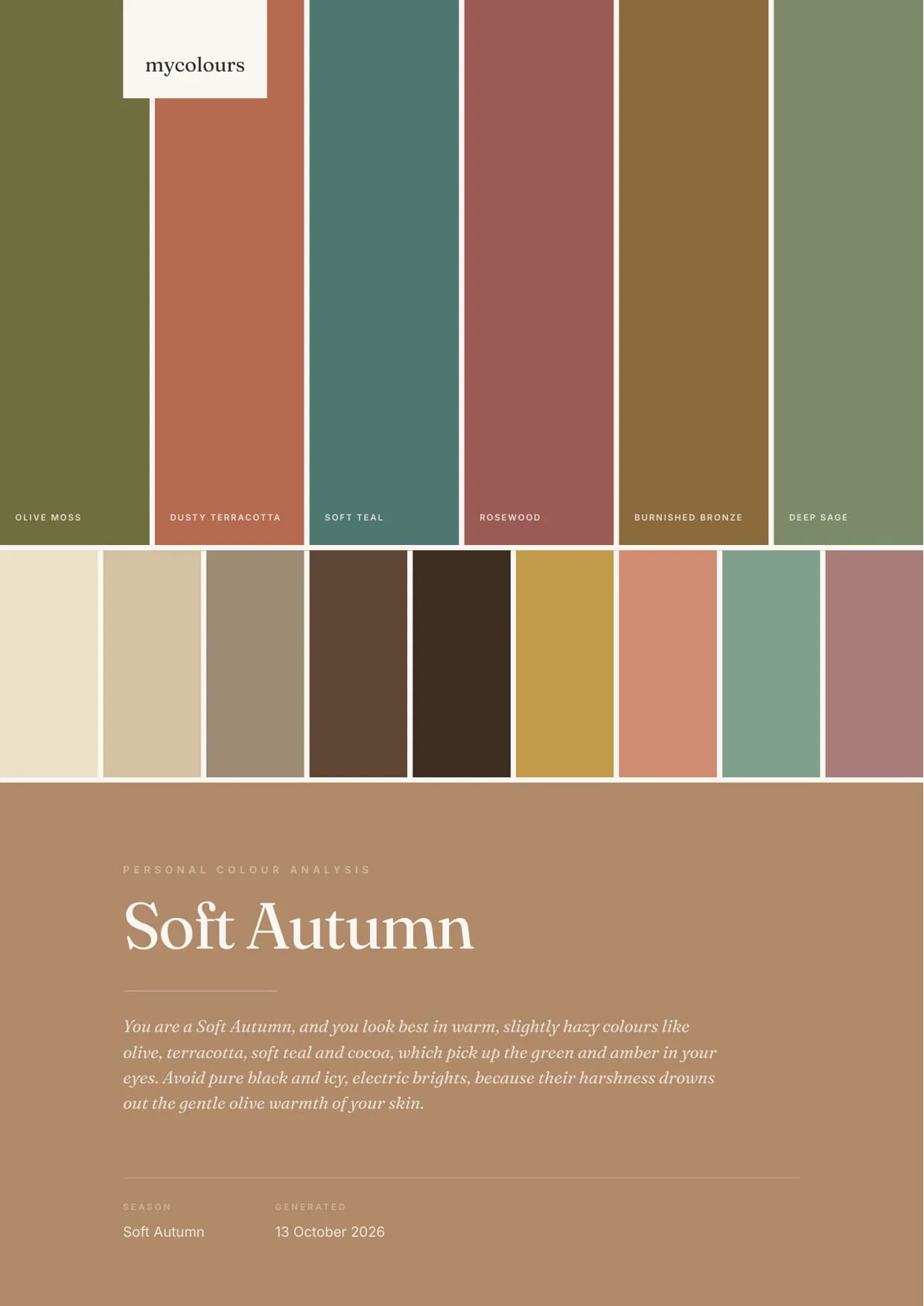
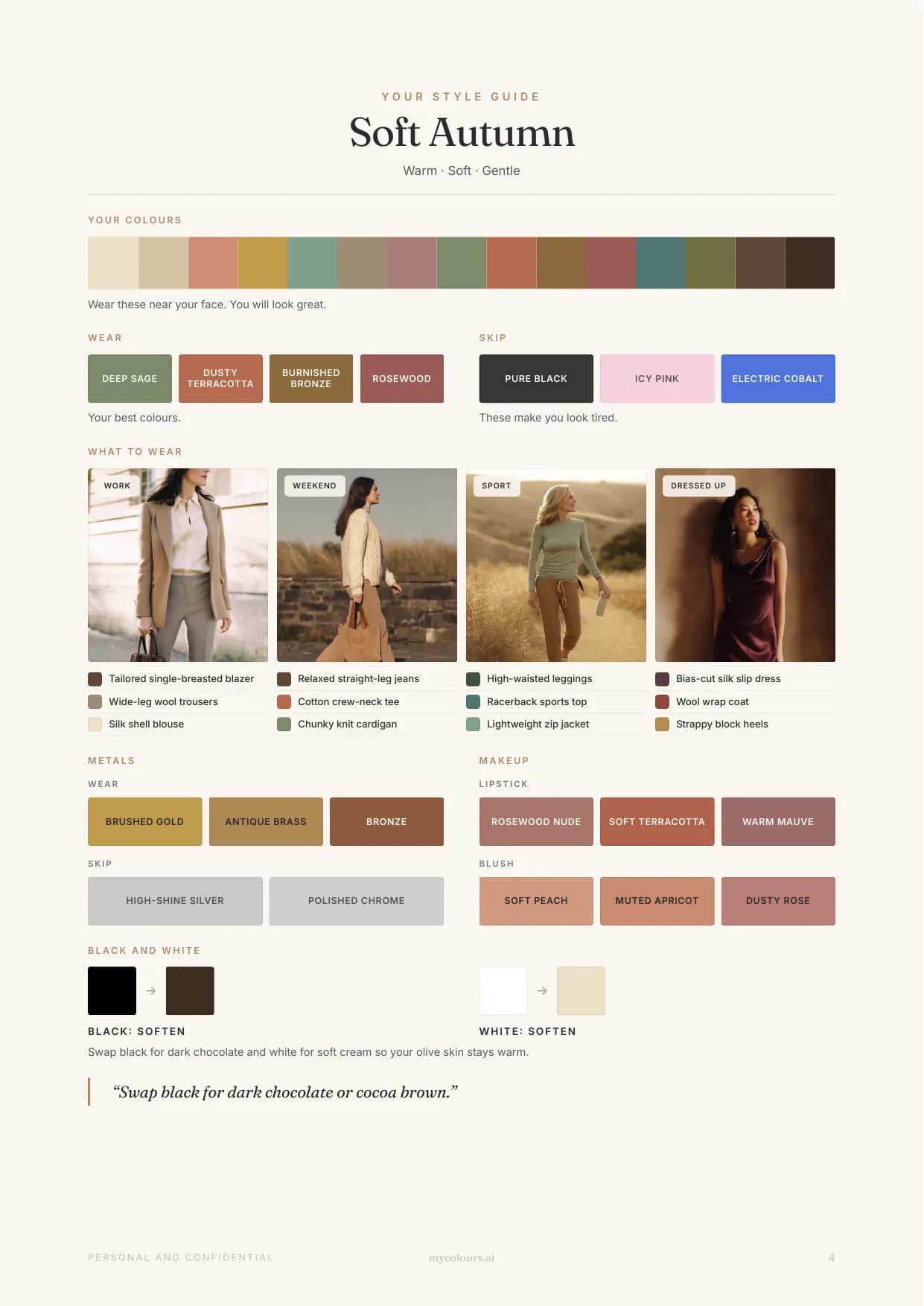
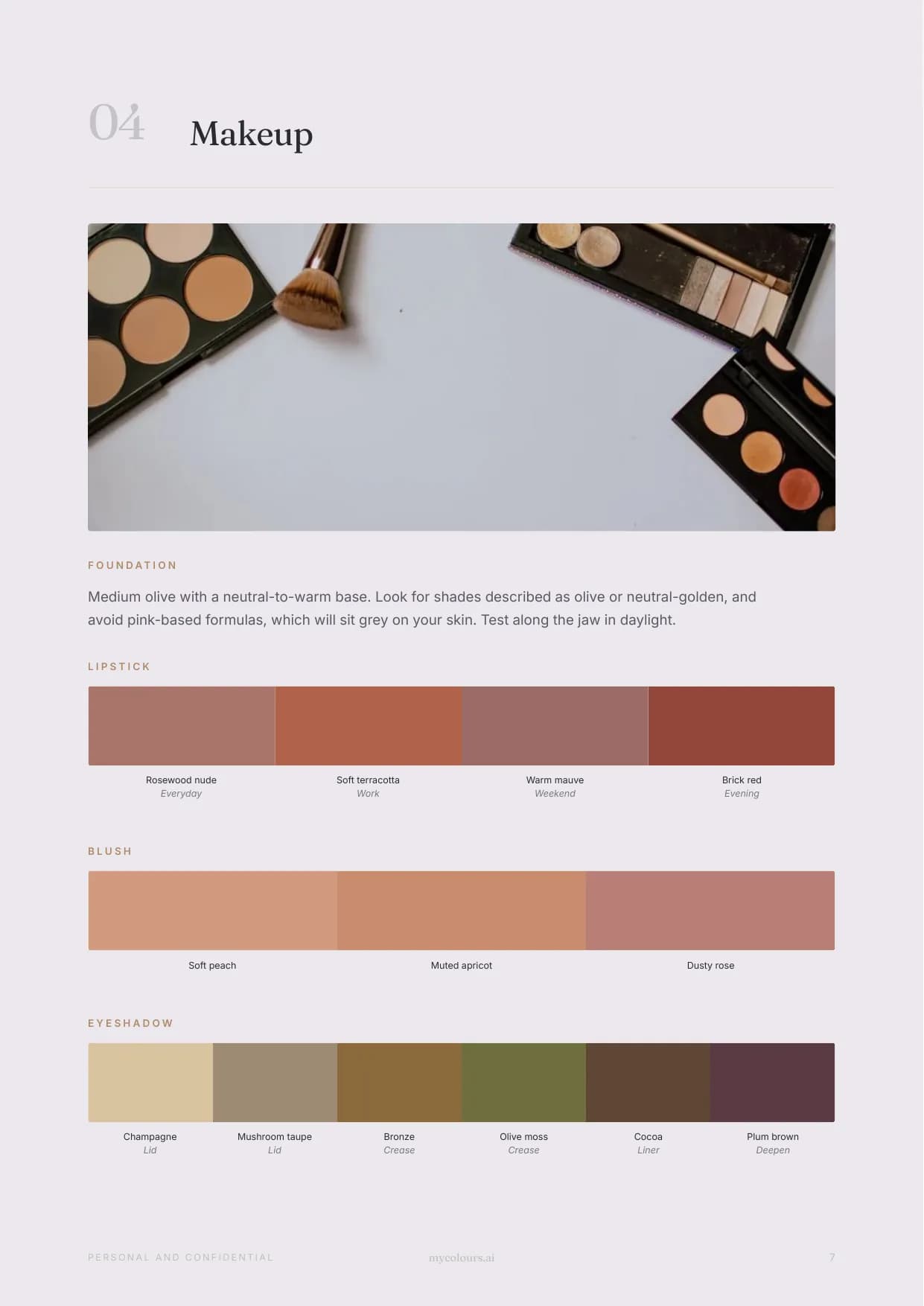
A real report, page by page.
These pages come from a genuine sample report, made by the same analysis that will read your photos. Yours is built from your own two selfies.
- Your season, and why, read from your skin, hair and eyes
- Your 19-colour palette, every colour named, with its code
- Makeup, hair colour and wardrobe guidance
- A PDF report to keep
More on colour

Is colour analysis actually worth it?
Colour analysis has a reputation problem. Here is an honest look at what it actually involves, what you gain from it, and whether it is worth the investment.
How to build a wardrobe around your colour season
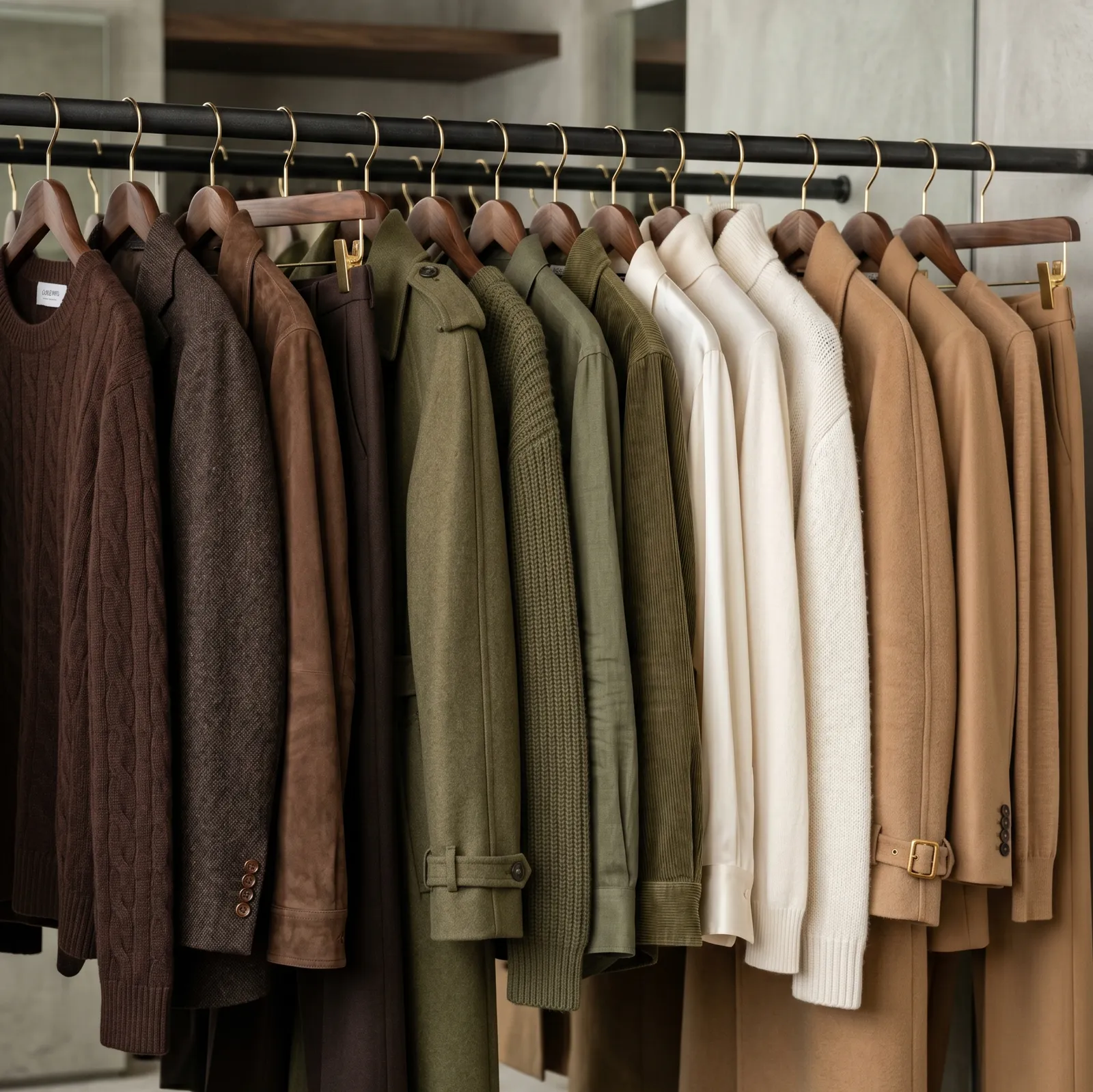
Knowing your colour season becomes genuinely transformative when you apply it systematically to how you build and maintain your wardrobe.
How do I find out what colours suit me?
From the natural light test to professional draping, here is an honest comparison of every method for finding the colours that genuinely work for you.
Your exact colours, from two selfies.
mycolours reads your skin, hair, and eyes and returns your colour season, a 19-colour palette, makeup matches, hair guidance, and a capsule wardrobe in a few minutes, for $9.99.