
Is colour analysis actually worth it?
An honest answer from someone who has seen what happens when people find their colours.
Colour analysis has a reputation problem.
On one hand, it has a devoted following. People who have had it done describe it as one of the most useful things they've ever invested in for their wardrobe. On the other hand, to anyone who hasn't experienced it, the concept can sound like an elaborate way to be told you suit blue.
So is it actually worth it? The honest answer is: yes, with some important context.
What does a colour analysis actually involve?
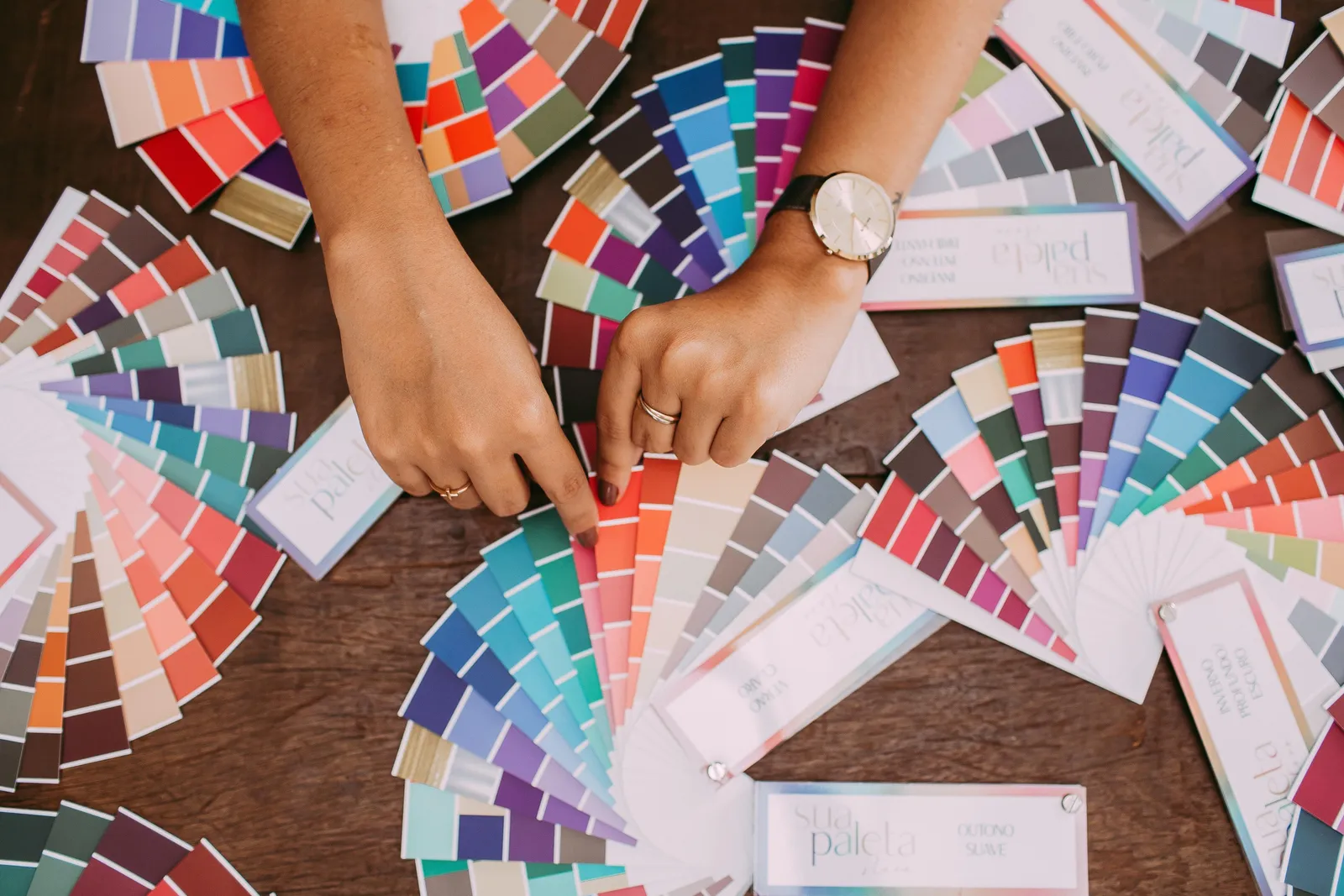
In its traditional form, a colour analysis is a session with a trained colour consultant in which draped fabric swatches are held against your bare face in natural light. The consultant observes how each colour interacts with your skin, noting what happens to your complexion, the shadows under your eyes, the clarity of your features. Over the course of the session, a pattern emerges: certain colour families consistently flatter, others consistently drain, and you are assigned a colour season with a corresponding palette.
Done well, this process is remarkably precise. The difference between colours that work and colours that don't is visible to anyone paying attention, not just the expert. Most people leave the session having seen it happen in real time and walk away convinced in a way they weren't before.

What do you actually get from knowing your colours?
The practical benefits are more significant than they might initially sound:
Faster, more confident shopping. When you know your palette, you stop trying things on that won't work. You know your colours, your neutrals, your accent shades. Shopping becomes a much more focused exercise.
A more coherent wardrobe. One of the most common results of colour analysis is that people discover their wardrobe already has a clear colour story in the pieces they reach for repeatedly. Analysis confirms and extends that. The pieces that never quite work tend to be the off-palette impulse buys.
Spending less over time. Buying fewer wrong things saves more money than the analysis costs, usually within the first season of applying it.
Knowing your makeup palette. The same principles that determine your clothing colours apply to foundation undertones, lip colours, blush shades, and eyeshadow. This is often one of the most immediately useful outputs.
Confidence that is hard to explain. Something shifts when you understand why certain things work. It's not just about looking better. It's about understanding your own colouring, which for a lot of people feels genuinely clarifying.
What colour analysis is not
It is not a restriction. A common fear is that being told your colours means being told to only wear beige, or to avoid colours you love. This is a misunderstanding of what the system does.
Every palette contains a wide range of shades across different colour families: neutrals, brights, muted tones, darks, lights. It is not a narrow prescription. It is a map of a large territory that is all yours.
It is also not a lifetime of rigidity. The palette is a guide, not a rule. Understanding your season gives you enough knowledge to make informed choices, including occasional choices outside the palette when you have good reason.
And it is not about making everyone look the same. The whole point is the opposite: identifying the specific colours that work for your specific colouring, which is different for every person.
The author's perspective
People sometimes come to colour analysis expecting to be corrected, to be told what they've been getting wrong. That's not what I believe it's for.
In my view, the purpose of understanding your colours is not to fix anything. It's to reveal something. Every person has a natural beauty that is particular to them, and colour is one of the most powerful tools for making that visible. Finding your palette isn't about restriction or correction. It's about understanding what already works about you, and building from there.
When someone sees the right colours against their face for the first time, what they usually say is some version of "that looks like me." That recognition is what makes it worth it. Not the rules. The revelation.

Is it worth the cost?
That depends on the format. A professional in-person colour analysis is typically priced between £150 and £400 in the UK, depending on the consultant and the level of detail included. For people who invest seriously in their wardrobe, that is usually recovered quickly in avoided wrong purchases.
For people who want the expertise without that price point, mycolours.ai delivers professional-quality analysis from two selfies for £7.99. Built on real colour consultancy expertise rather than a generic quiz, it gives you your exact season, a 19-colour personal palette, makeup colour matches, hair guidance, and a 14-piece capsule wardrobe.
It is the same framework, made accessible.
Who benefits most from colour analysis?
Almost everyone benefits to some degree. The people who tend to find it most transformative are those who:
Have always found shopping frustrating because things look different on them than expected. Have a wardrobe full of things they rarely reach for without knowing exactly why. Feel like their clothes don't quite reflect how they want to look. Have been told they suit certain colours but don't know why, and can't apply that knowledge consistently. Are at a point of wardrobe reset and want to build intentionally rather than reactively.
Questions, answered
No. Your palette covers a wide range of shades, tones, and colour families. The goal is to identify what works, not to restrict what you wear. Most people find their palette contains colours they already love and wear, which is part of what makes the confirmation so satisfying.
Yes. The difference between a colour that harmonises with your colouring and one that conflicts with it is genuinely visible, to you and to everyone around you. It is not subtle. Once you have seen the right colours against your face in good light, it is difficult to unsee.
Yes. The seasonal system applies to all complexions, all ethnicities, all hair colours. The framework identifies undertone, depth, and saturation needs regardless of surface skin tone. The analysis is not built on assumptions about what looks good on any particular group. It is built on the physical interaction between colour and individual colouring.
Your season does not change. Your undertone is fixed for life. As your hair changes with age, some shades within your palette may suit you better than others, but you remain the same season.
mycolours.ai is built on professional colour consultancy expertise and the same analytical framework used in in-person sessions. It is not a quiz or a generic tool. The analysis is based on your actual images, and the results are specific to your colouring. For most people, it delivers the same practical outcomes as an in-person session at a fraction of the cost. Start your analysis at mycolours.ai.
Melissa O'Neill
Style Editor at mycolours.ai
Melissa O'Neill is the style editor at mycolours.ai. She started her career on the Paul Smith concession at Harrods, where she learned that the difference between looking ordinary and looking incredible often comes down to colour, not cost. She has since built and run luxury boutique hotels, businesses where every detail, from the linen shade to the lighting warmth, was chosen to make people feel something. She started mycolours.ai because she believes the tools to look and feel your best should not cost £300 or require a stylist on speed dial.
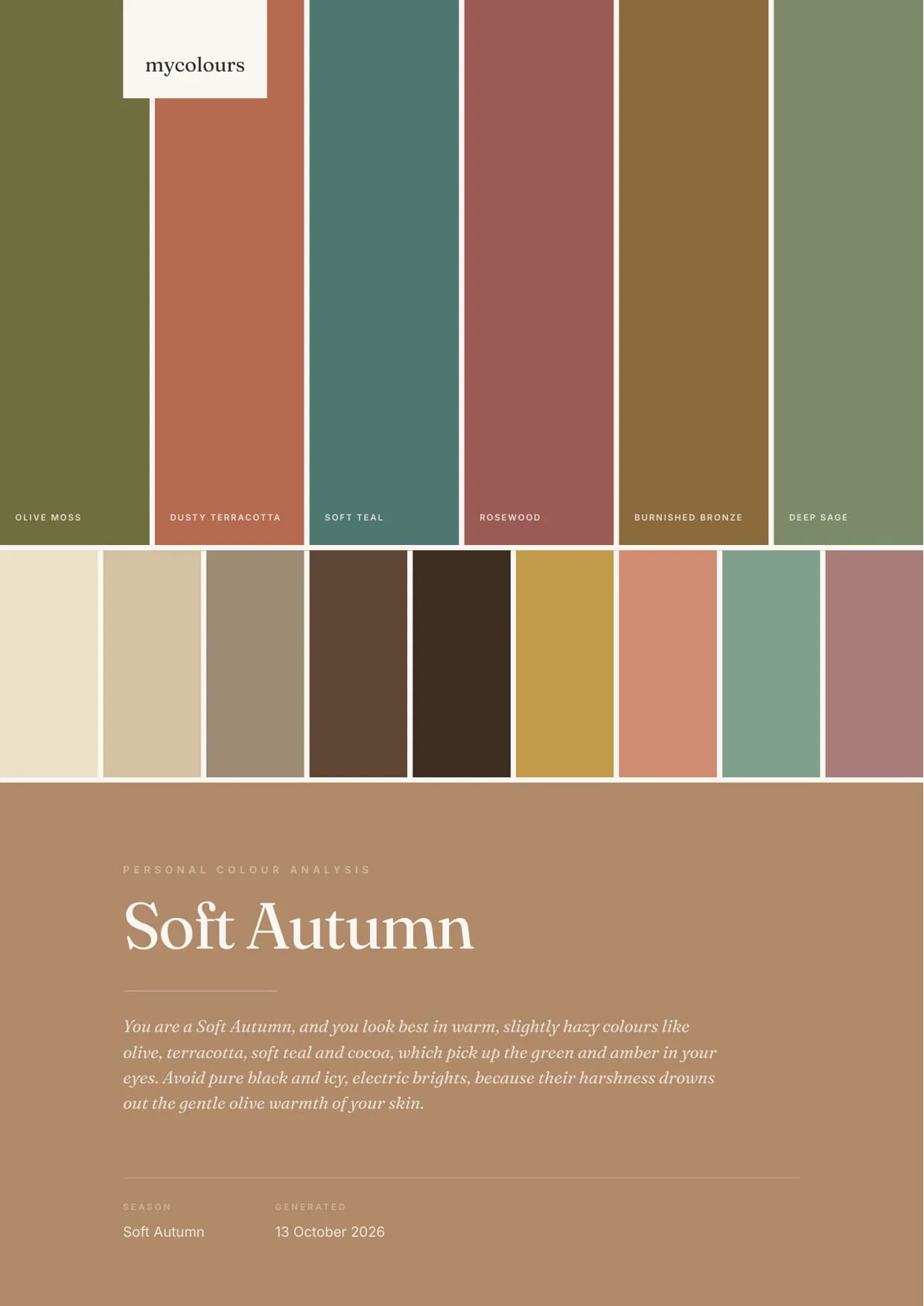
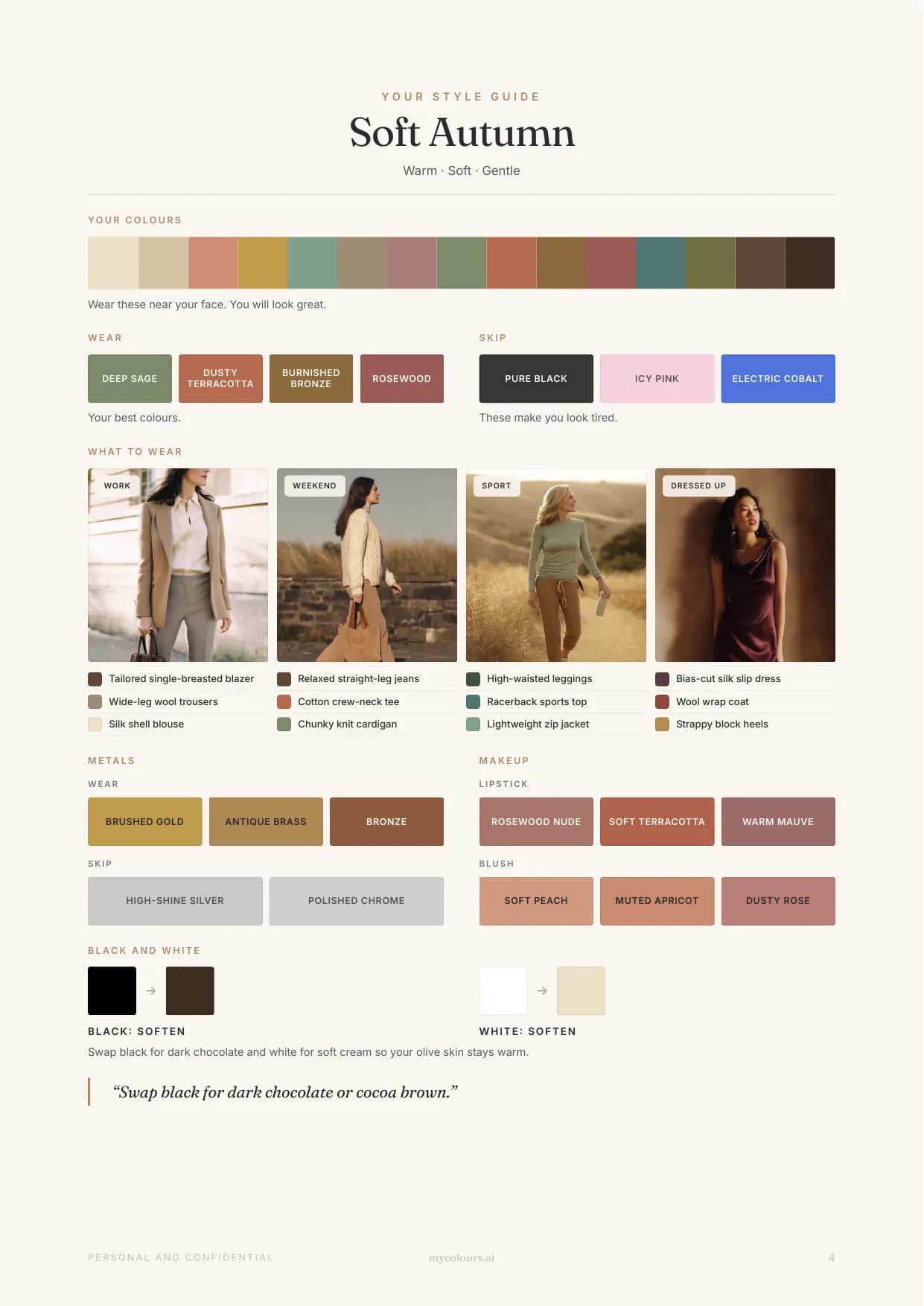
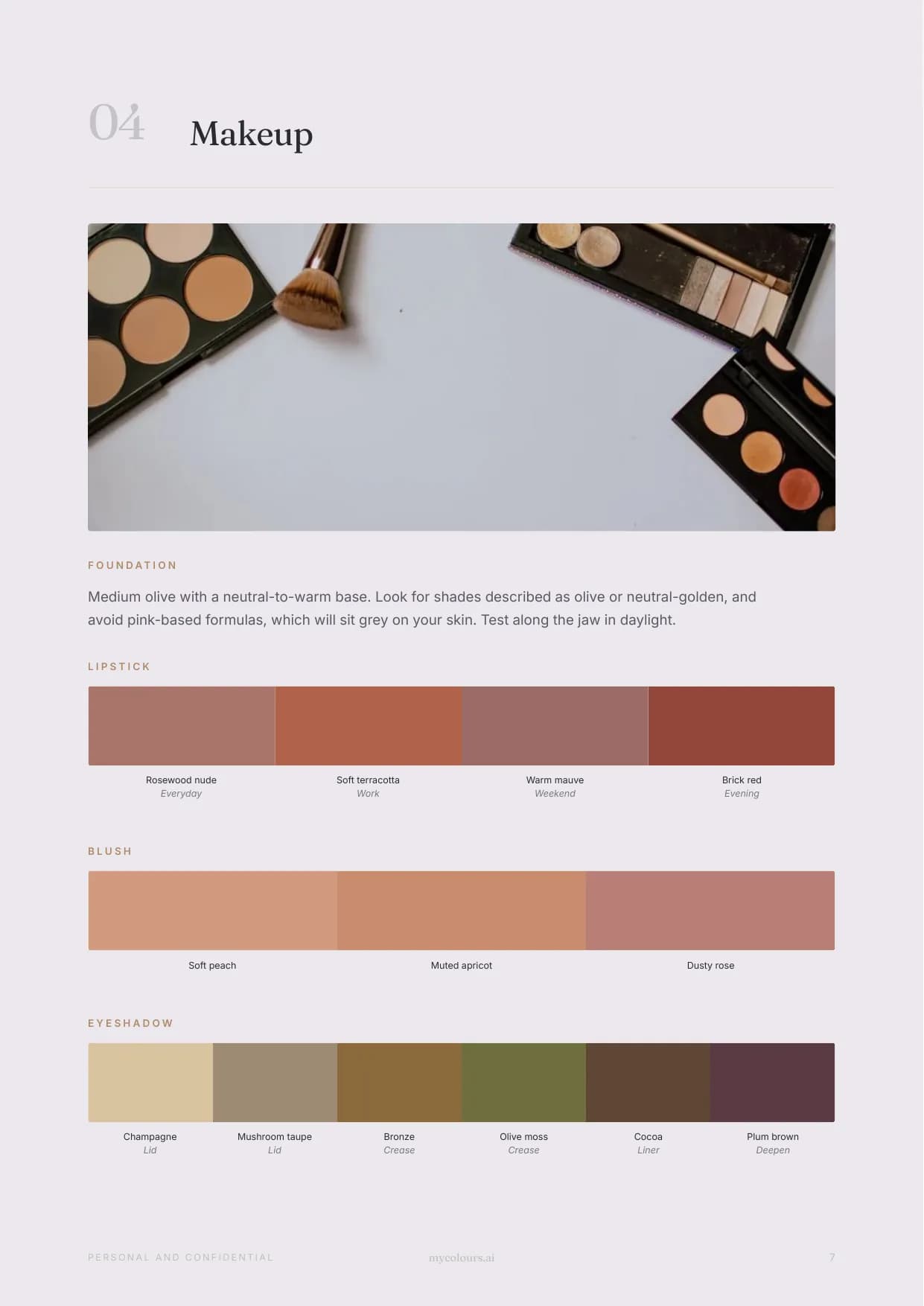
A real report, page by page.
These pages come from a genuine sample report, made by the same analysis that will read your photos. Yours is built from your own two selfies.
- Your season, and why, read from your skin, hair and eyes
- Your 19-colour palette, every colour named, with its code
- Makeup, hair colour and wardrobe guidance
- A PDF report to keep
More on colour

Can ChatGPT do my colour analysis? An honest answer.
General AI tools can explain colour theory, but applying a consistent expert framework to your specific colouring is a different matter entirely.
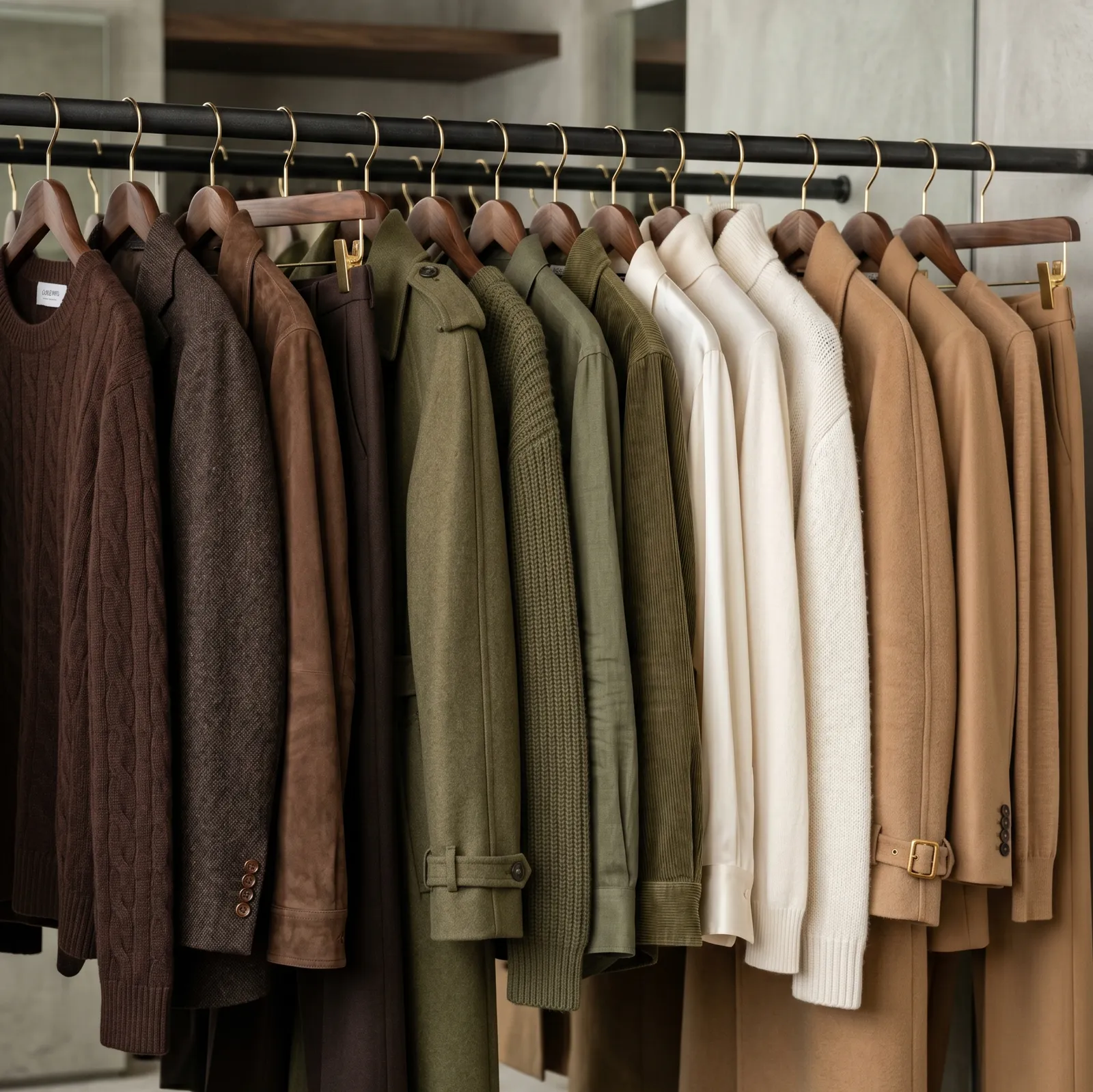
How to build a wardrobe around your colour season
Knowing your colour season becomes genuinely transformative when you apply it systematically to how you build and maintain your wardrobe.
How do I find out what colours suit me?
From the natural light test to professional draping, here is an honest comparison of every method for finding the colours that genuinely work for you.
Your exact colours, from two selfies.
mycolours reads your skin, hair, and eyes and returns your colour season, a 19-colour palette, makeup matches, hair guidance, and a capsule wardrobe in a few minutes, for $9.99.