How do I find out what colours suit me?
There are several ways to approach this. Here is an honest guide to all of them.
It sounds like it should be simple. You're a person. Colours exist. Surely there is a straightforward way to work out which ones belong together.
In practice, most people navigate this through trial and error for decades: buying things that look wrong when they get home, gravitating instinctively toward certain shades without knowing why, occasionally being stopped in their tracks by a compliment when they're wearing something they almost didn't buy.
There is a better way. Several of them, actually.
Method 1: The natural light test
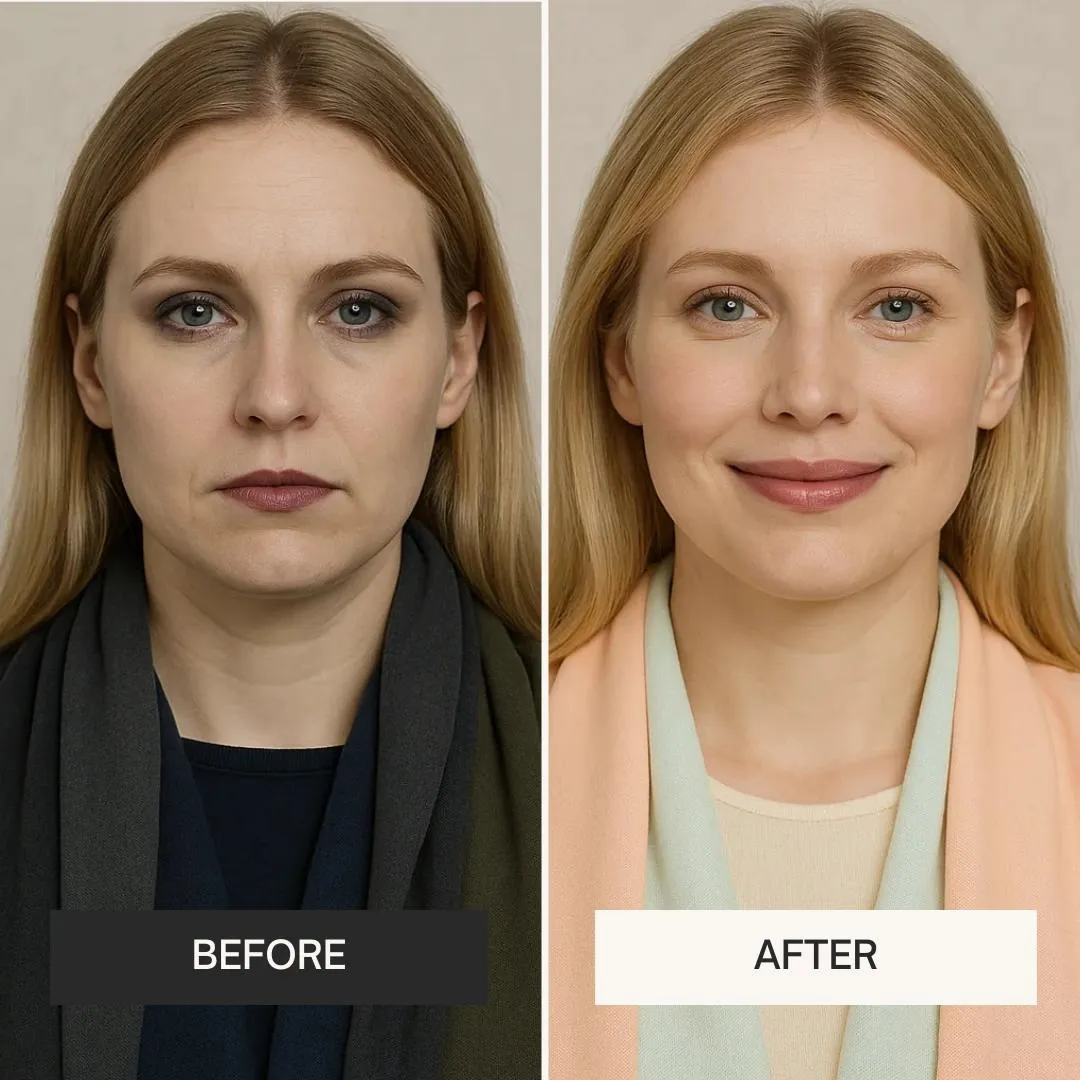
The fastest self-directed method is also the most reliable one. Take a selection of clothing in different colour families, stand in natural daylight (not artificial light, which distorts colour significantly), hold each piece close to your face with no makeup on, and observe what happens to your skin rather than the fabric.
Look for: increased or decreased shadows under the eyes. Skin looking more or less even. Features appearing more or less defined. A sense of the face coming forward or receding.
This test doesn't require any expertise. The difference between a colour that works and one that doesn't is visible when you know what to look for. The limitation is that it requires a range of colours to compare, and it gives you a sense of what works without always explaining why.
Method 2: The undertone tests
Understanding your undertone is the foundation of knowing your colours. There are several simple tests:
The vein test. Look at the veins on your inner wrist in natural light. Green or olive veins tend to indicate warm undertone. Blue or purple veins tend to indicate cool undertone. A mix of both suggests neutral.
The jewellery test. Observe which metal tends to suit you better in general. Gold suits warm undertones; silver suits cool undertones. If both look equally good, you're likely neutral.
The white test. Hold a pure white fabric and a warm ivory or cream fabric next to your bare face. Whichever looks more flattering indicates your undertone direction.
These tests give you a starting point, but undertone is only one variable. Depth and saturation also matter, which is why undertone tests alone don't give you a complete picture.
Method 3: Quizzes and online tools
There are many colour analysis quizzes available online. They vary enormously in quality. The better ones ask questions about undertone, hair colour, eye colour, and contrast level, and produce a season result. The weaker ones ask three questions and assign you a season based on hair colour alone.
The limitation of all quiz-based tools is that they rely on self-reporting and interpretation. Questions like "is your skin warm or cool?" assume you already know the answer, which defeats the purpose for most people. The result is only as accurate as the information you provide, and for many people, that information is the very thing they're trying to determine.
Method 4: ChatGPT and AI tools
An increasing number of people are asking ChatGPT, Gemini, or other AI assistants to analyse their colour season. This is worth addressing honestly.
General AI tools can produce reasonable results when given clear photos and structured prompts. They have access to colour theory information and can apply it. However, they are not trained specifically for colour analysis, they do not have a consistent analytical framework, and the quality of the output depends heavily on how the question is asked. Two people with the same colouring asking the same AI tool on different days may receive different results.
AI tools are a useful starting point if you have no other access to analysis. They are not a substitute for a purpose-built, expert-informed system.
Method 5: Professional in-person colour analysis
The gold standard. A trained consultant, natural light, fabric draping, direct observation of how each colour interacts with your skin. Extremely accurate. Typically priced between £150 and £400. Requires booking, travel, and significant time investment. Not accessible to everyone.
Method 6: A purpose-built expert analysis tool
mycolours.ai sits between the quiz and the in-person session. It is not a quiz. It analyses your actual images rather than relying on self-reported answers, and it is built on professional colour consultancy expertise rather than a generic algorithm.
The process takes two selfies and delivers your exact season, a 19-colour personal palette, makeup colour matches, hair guidance, and a 14-piece capsule wardrobe. For £7.99. It applies the same analytical framework as a professional session, made accessible in terms of both cost and convenience.
The author's perspective
I have seen all of these methods in practice, and my view is this: the goal is not to find a method, it is to find your colours. Any approach that genuinely gets you there is worth using.
That said, I am consistently struck by how much the right colours do. Not in a corrective sense, as though something needed fixing, but in a revelatory one. The right colour makes visible something that was already there. It is, at its best, a form of clarity: not about what you should wear, but about who you already are and how to make that legible.
Whatever method you use to get there, that clarity is what you're looking for.
How to apply what you learn
Finding your season or your best colours is only useful if you can apply it consistently. Once you have a result:
Note the colour families, not just specific shades. Your palette contains a range of tones within each family, and knowing the family gives you flexibility when shopping.
Test your current wardrobe against the palette. Most people find their instinctive favourites are already there. The pieces that never quite work tend to be the outliers.
Use the palette for neutrals first. Bags, coats, shoes, and base layers in your palette colours work harder than anything else, because they appear in almost every outfit.
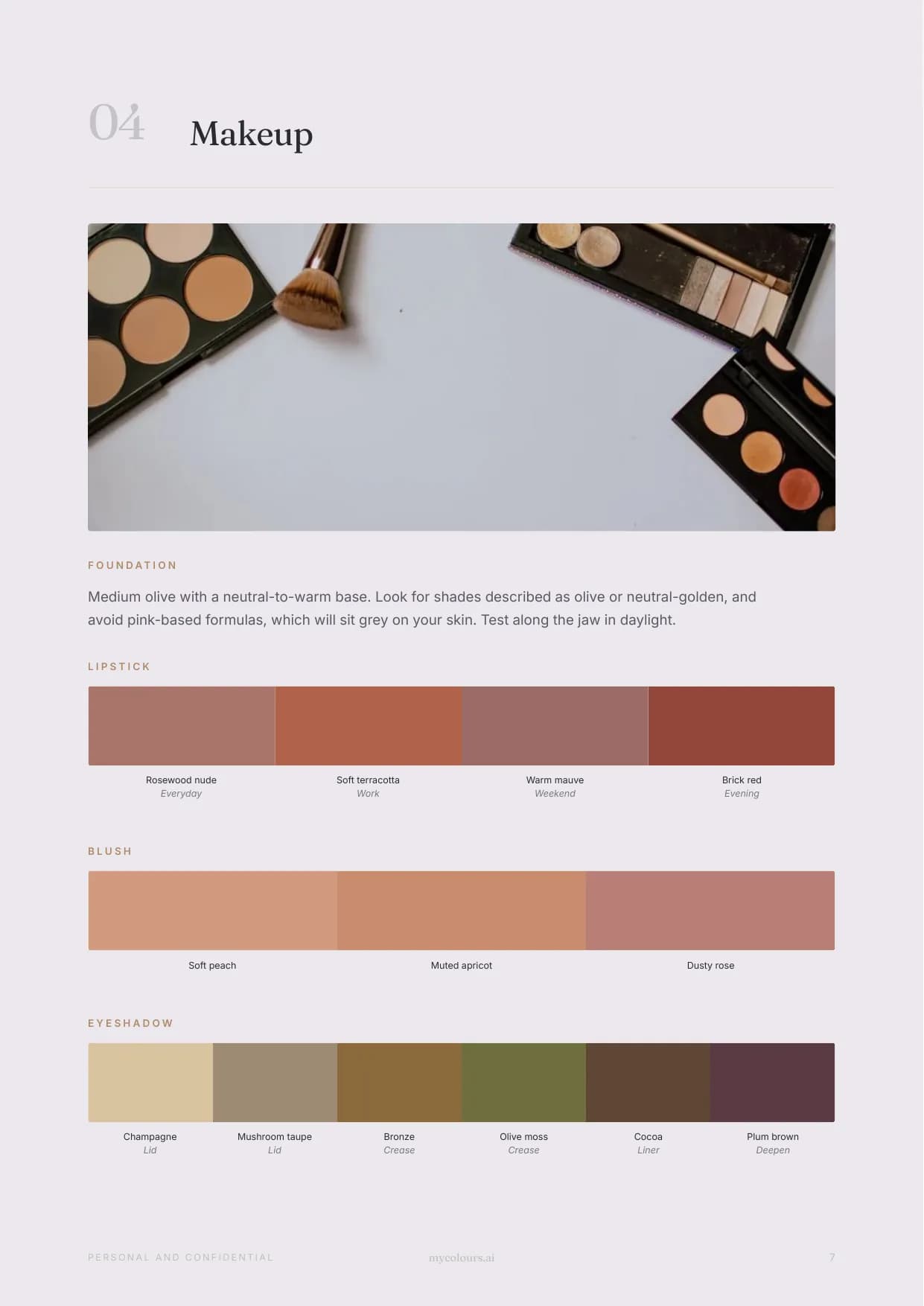
Apply the same principles to makeup. Foundation undertone, lip colour, and blush shade all work on the same logic as clothing colour.

Questions, answered
The undertone tests and natural light test described above are free and give you a starting point. Online quizzes vary in quality but many are free. A complete, accurate analysis that gives you a full palette, makeup matches, and wardrobe guidance costs £7.99 at mycolours.ai.
This is common, particularly if you have neutral undertones or sit between two seasons. A purpose-built analysis tool or in-person consultation will give you the most reliable result because it considers undertone, depth, and saturation together rather than in isolation.
Your season does not change. Your undertone is fixed. As your hair lightens naturally or goes grey, some shades within your palette may suit you better than others, but the season stays the same.
No. Your undertone is beneath the surface and does not change with tanning. Your surface skin tone changes; your season does not. Analysis works best on your natural, untanned skin where possible, but a tan does not invalidate the result.
Take two clear selfies in natural light with no filter and minimal makeup. Upload them at mycolours.ai. The analysis identifies your exact season, builds your personal palette, matches your makeup, and produces your capsule wardrobe. Start at mycolours.ai.
Melissa O'Neill
Style Editor at mycolours.ai
Melissa O'Neill is the style editor at mycolours.ai. She started her career on the Paul Smith concession at Harrods, where she learned that the difference between looking ordinary and looking incredible often comes down to colour, not cost. She has since built and run luxury boutique hotels, businesses where every detail, from the linen shade to the lighting warmth, was chosen to make people feel something. She started mycolours.ai because she believes the tools to look and feel your best should not cost £300 or require a stylist on speed dial.
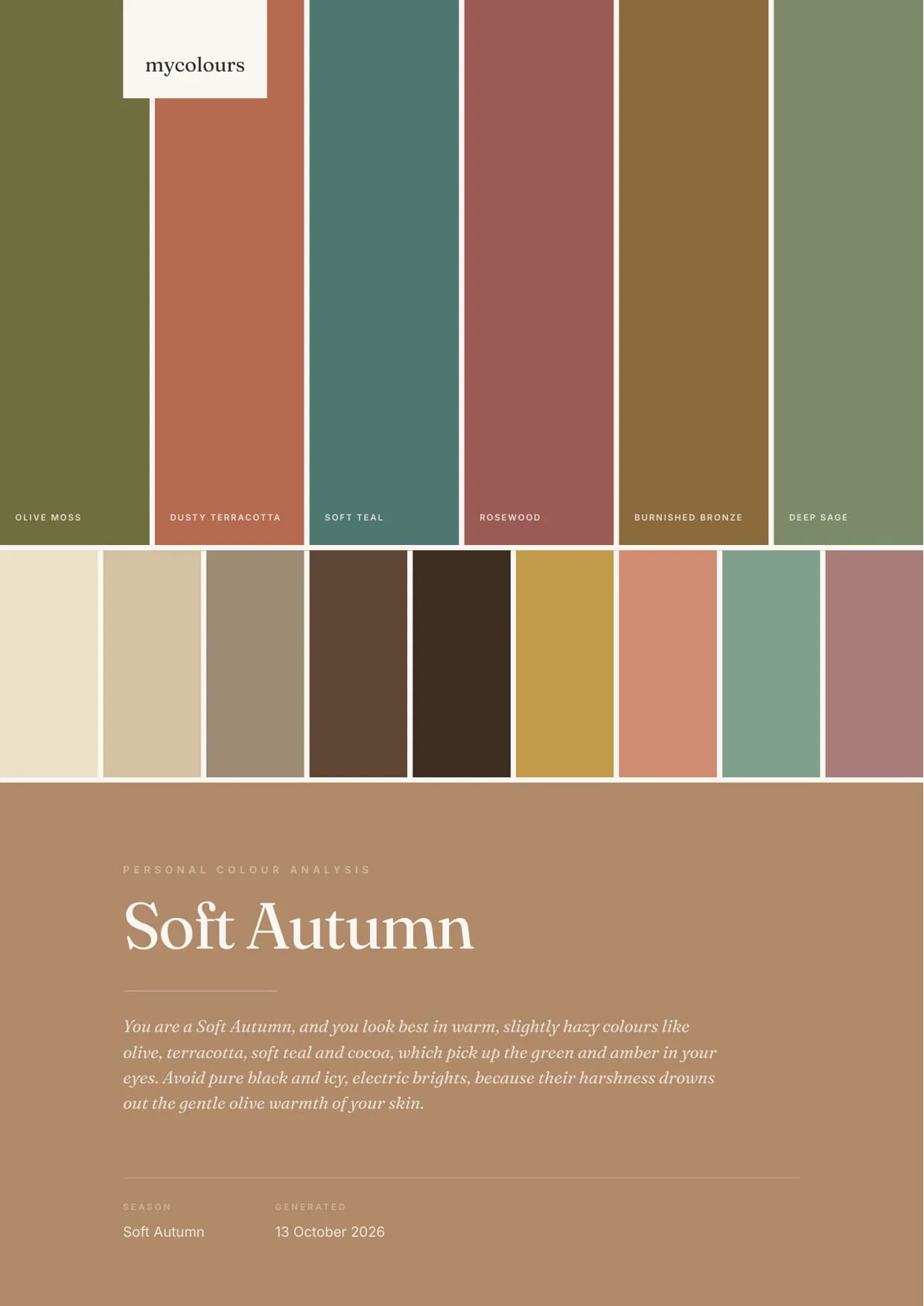
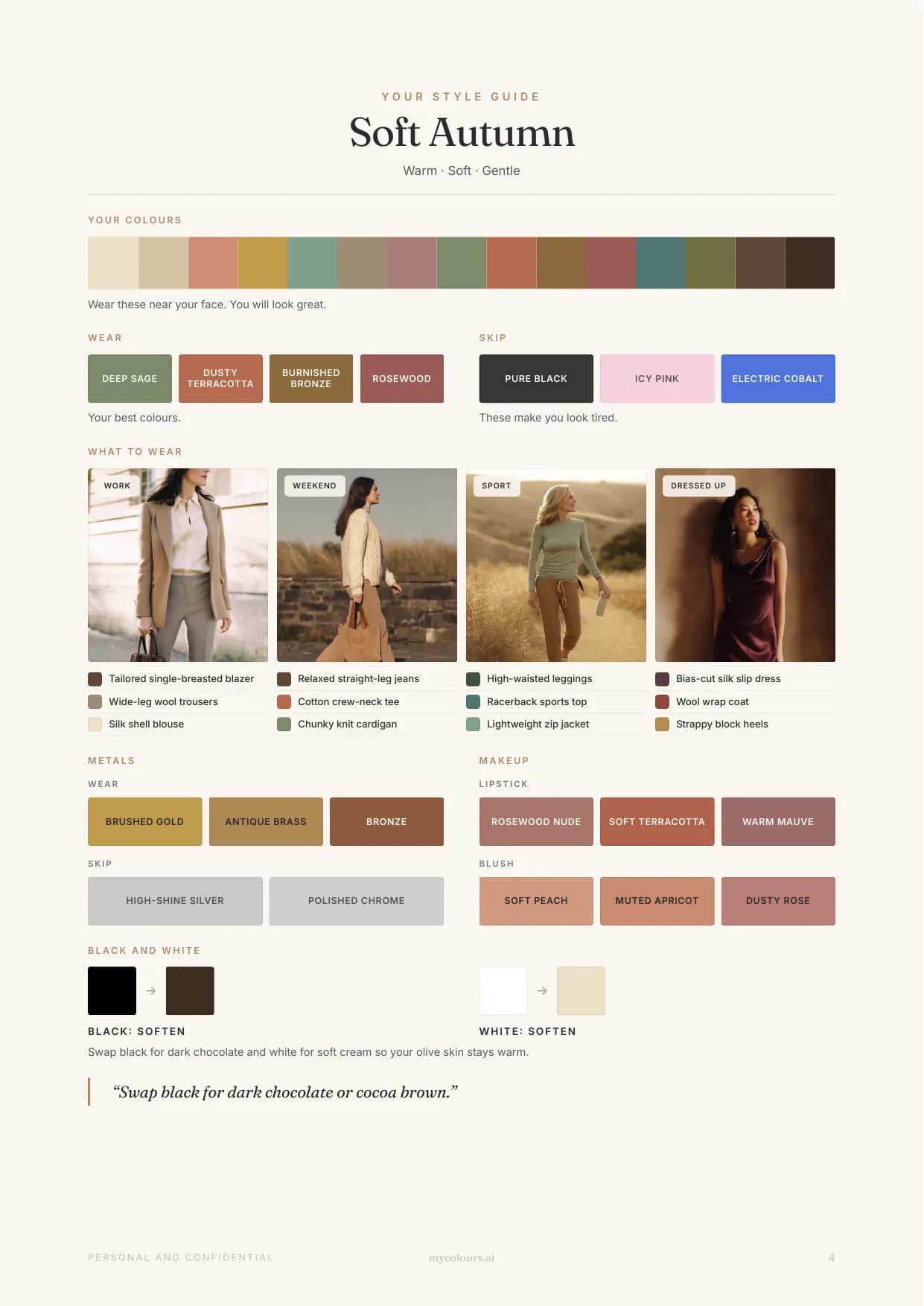
A real report, page by page.
These pages come from a genuine sample report, made by the same analysis that will read your photos. Yours is built from your own two selfies.
- Your season, and why, read from your skin, hair and eyes
- Your 19-colour palette, every colour named, with its code
- Makeup, hair colour and wardrobe guidance
- A PDF report to keep
More on colour
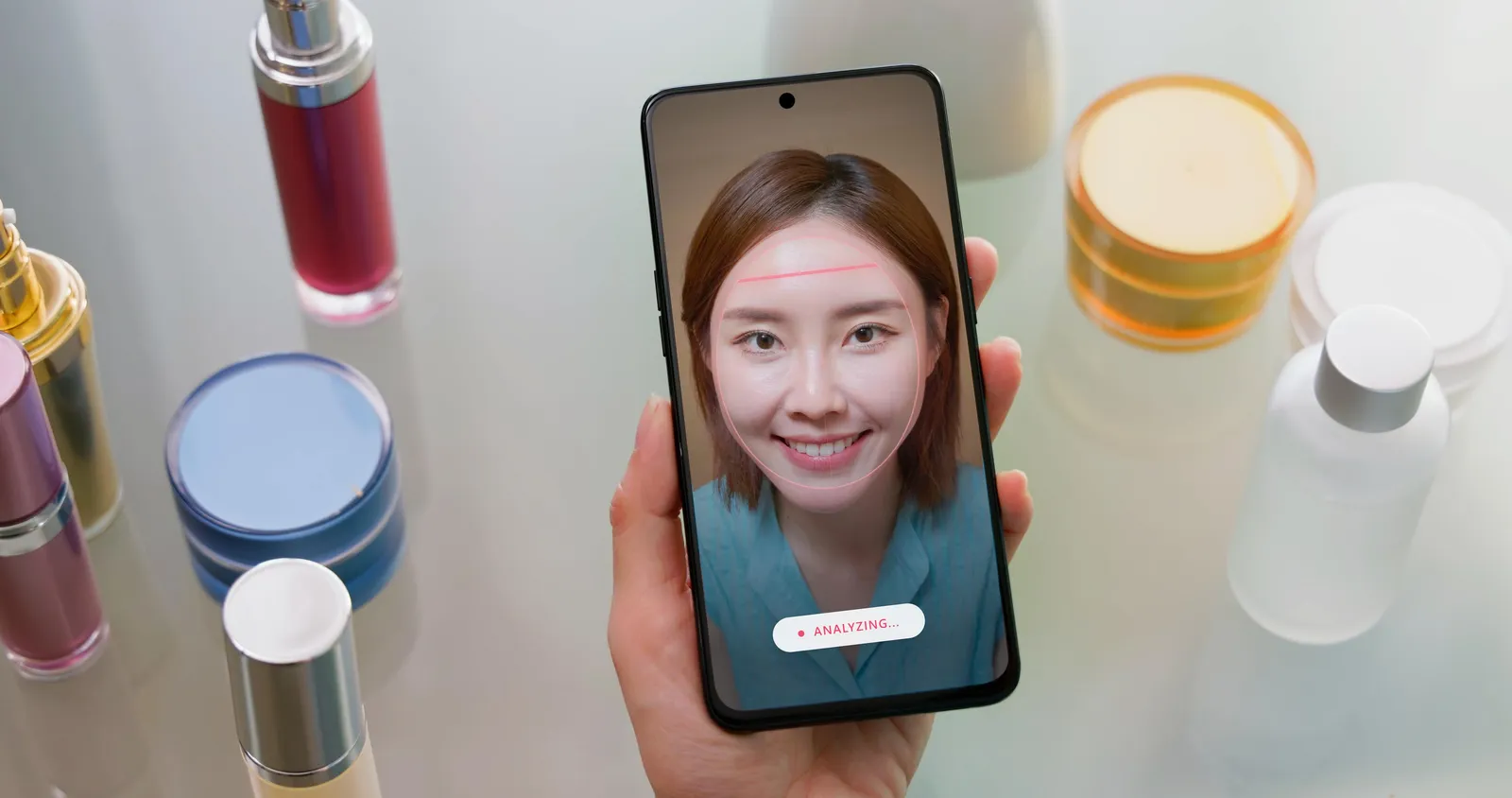
Can ChatGPT do my colour analysis? An honest answer.
General AI tools can explain colour theory, but applying a consistent expert framework to your specific colouring is a different matter entirely.

Is colour analysis actually worth it?
Colour analysis has a reputation problem. Here is an honest look at what it actually involves, what you gain from it, and whether it is worth the investment.
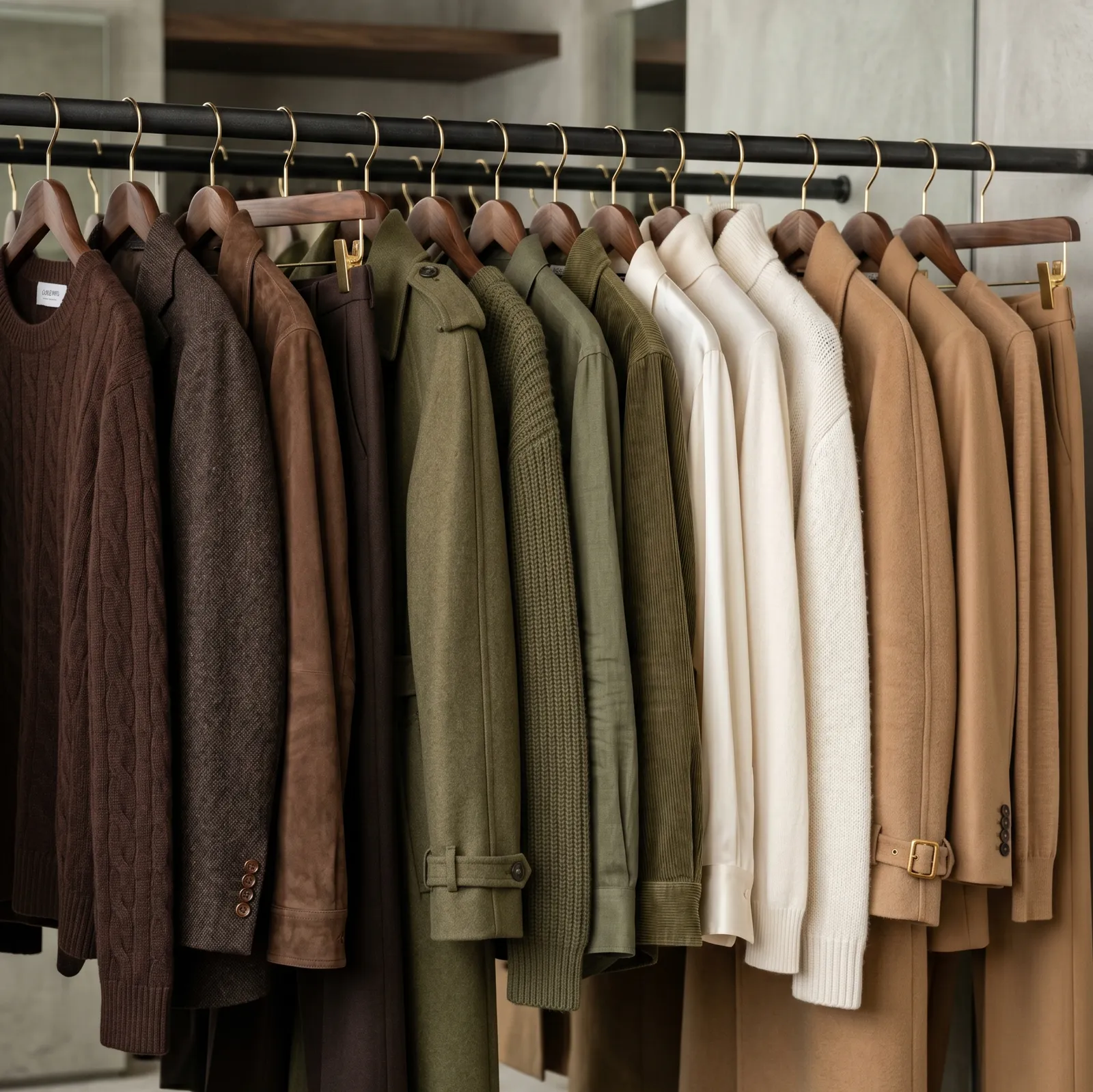
How to build a wardrobe around your colour season
Knowing your colour season becomes genuinely transformative when you apply it systematically to how you build and maintain your wardrobe.
Your exact colours, from two selfies.
mycolours reads your skin, hair, and eyes and returns your colour season, a 19-colour palette, makeup matches, hair guidance, and a capsule wardrobe in a few minutes, for $9.99.