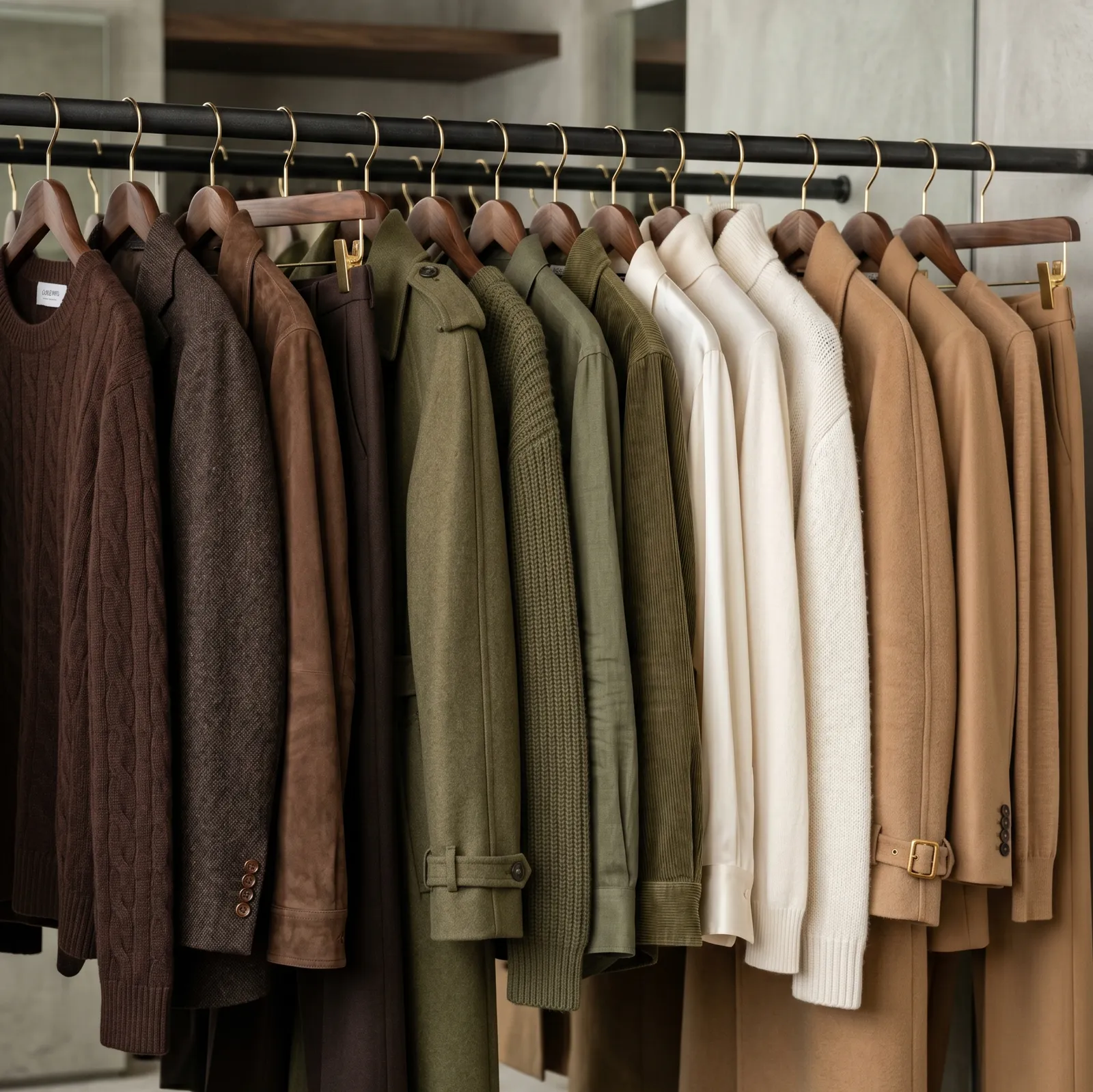
How to build a wardrobe around your colour season
Knowing your season is the beginning. Here is how to actually use it.
Knowing your colour season is genuinely useful. But it becomes transformative when you apply it systematically to how you build and maintain your wardrobe. This is the practical guide to doing that.
Start with your neutrals
The highest-impact application of your season palette is not in statement pieces. It is in neutrals.
Neutrals are the colours you wear most frequently and in the highest volume: coats, trousers, bags, shoes, base layers. They appear in almost every outfit, which means they either work for you consistently or work against you consistently. Getting your neutrals right changes more of your wardrobe than any other single step.
Every season has its own set of neutrals: the dark ones (your season's equivalent of black and navy), the mid-tones (your season's equivalent of grey and khaki), and the lights (your season's equivalent of white and cream).
For warm autumn seasons, dark neutrals include dark brown, warm charcoal, and deep olive. For cool summer seasons, they include cool charcoal, deep navy, and dark muted teal. For winter seasons, pure black, true navy, and deep charcoal.
When you replace even two or three of your most-worn neutral pieces with your season's neutrals, the effect on how everything looks together is immediate.
Identify your anchor colours
Within your palette, some colours will feel most like you. These are your anchor colours: the ones you reach for instinctively, the ones that have generated the most compliments, the ones that already exist in your wardrobe without you having consciously chosen them for that reason.
Anchor colours are worth investing in. A coat, a well-cut blazer, or a key dress in your anchor colour becomes one of the most-used pieces in your wardrobe, because every time you wear it, it works.

Use your palette for the 80/20 rule
A practical way to apply your season is to aim for around 80% of your wardrobe to be within your palette, with around 20% of latitude for pieces you love that may sit slightly outside it.
The 80% in-palette proportion creates a wardrobe where everything works together. You can mix and match across pieces with confidence because the underlying colour logic is coherent. Getting dressed becomes faster and easier because there are fewer combinations that don't work.
The 20% latitude acknowledges that you are a person with preferences, not a colour system. There will be pieces you love that sit outside your palette. Having that space is realistic and important. The goal is not rigid compliance. It is a wardrobe where the overwhelming majority of your choices are working for you.
Apply the palette to makeup
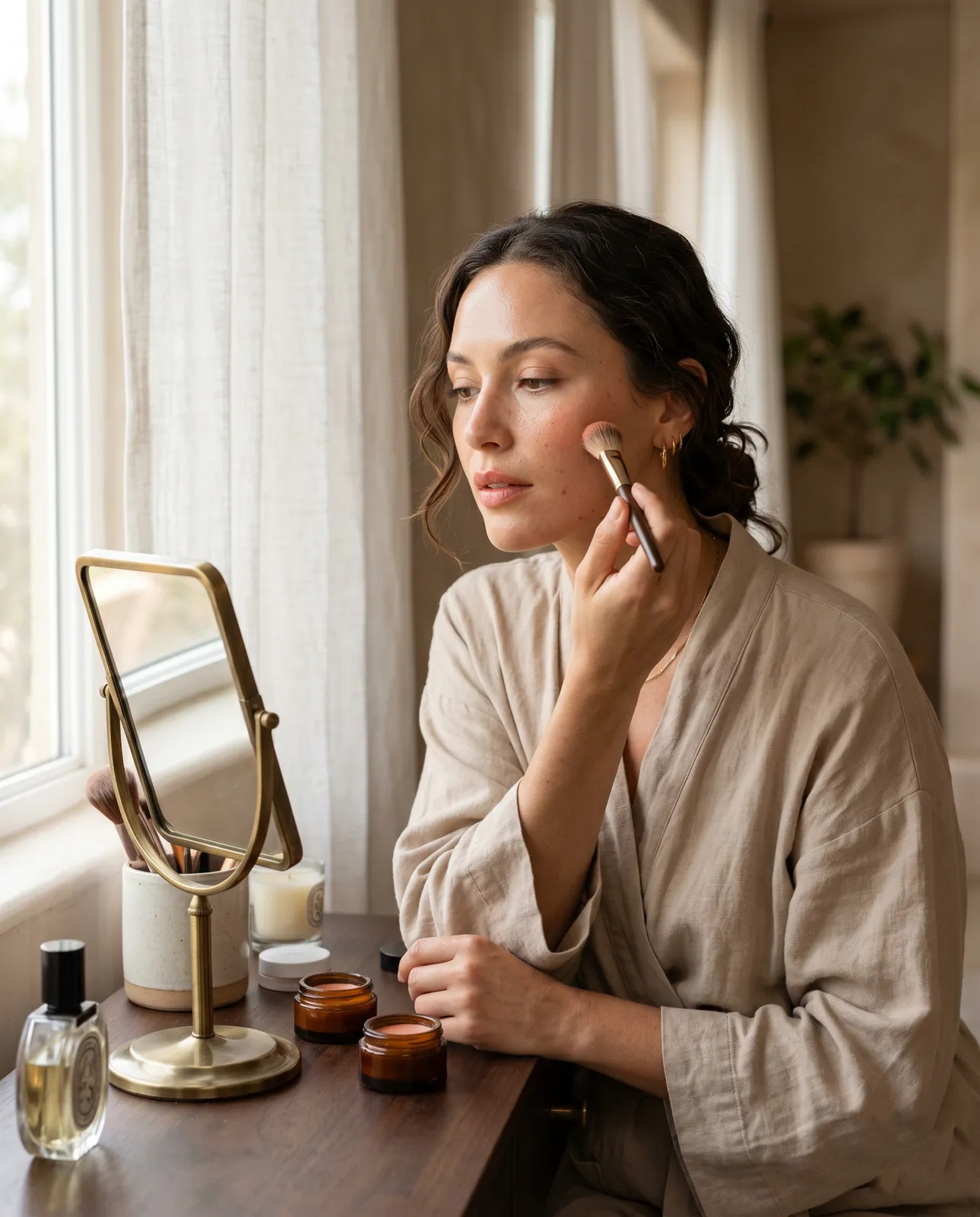
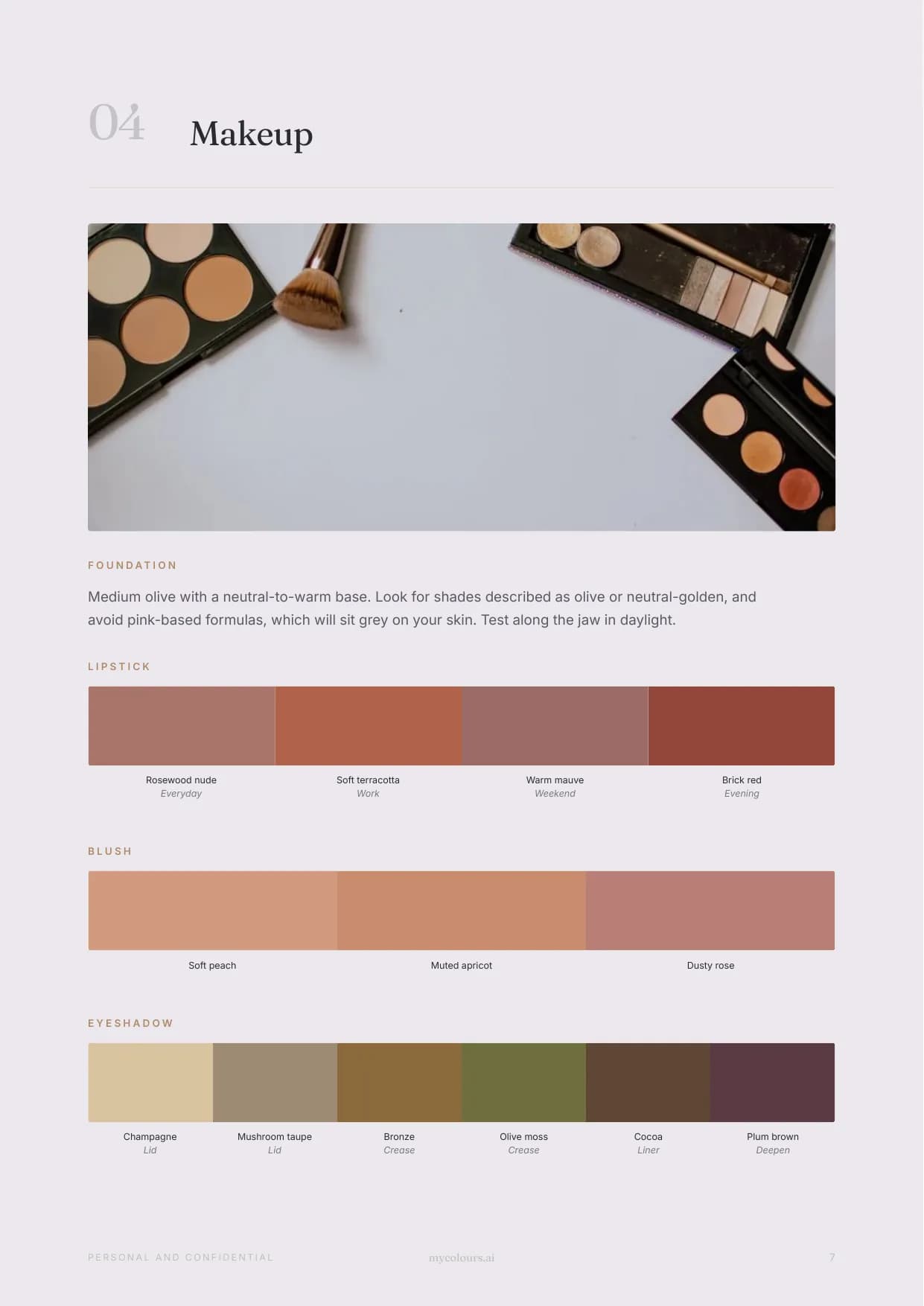
The same principles that determine your clothing colours determine your makeup colours. Your season palette includes guidance on:
Foundation undertone: cool-toned foundations for cool seasons, warm-toned for warm seasons. Getting this wrong creates the exact same problem as wearing the wrong clothing colour near your face.
Lip colours: your season's lip colours tend to be in the same colour family as your clothing palette. Cool, muted seasons tend toward berry, soft rose, and muted mauve. Warm seasons tend toward warm reds, corals, and peachy nudes. Winter seasons can carry cool reds, deep berries, and true pinks.
Blush: the same temperature principle applies. Warm blushes on cool skin look orange or muddy; cool blushes on warm skin look grey or purple.
Eyeshadow: your season's neutrals work as eyeshadow neutrals. Warm seasons look best in taupe, bronze, and warm browns. Cool seasons look best in grey, cool taupe, and cooled-down browns.
The author's perspective
One of the things I find most satisfying about applying colour season to a wardrobe is the cumulative effect. Individual pieces in the right colours look better. But a whole wardrobe calibrated to the same palette does something beyond that: it creates coherence, a visual identity that is specifically and recognisably yours.
I believe that dressing well is not about following rules or trends. It is about understanding what is specific to you, your colouring, your proportions, your aesthetic, and making choices that are grounded in that understanding rather than in what is generally considered safe or fashionable.
When a wardrobe is built around the right colours, getting dressed stops being a problem to solve. It becomes something that simply reflects who you are. That is the goal.
Build incrementally, not from scratch
Most people do not need to replace their entire wardrobe to apply their season. A more practical approach:
First, identify what you already own that falls within your palette. These are your existing good pieces. Wear them more.
Second, identify what you own that consistently doesn't feel right. These are the off-palette pieces. Stop buying more of this type.
Third, as pieces need replacing, replace them with in-palette alternatives. Over one or two wardrobe cycles, the proportion shifts without requiring a major upheaval.
Use the palette for shopping
The most immediate practical benefit of knowing your season is in shopping. Instead of holding up every item and asking "does this suit me?", you already know the answer based on whether the colour is within your palette.
This makes shopping faster, less expensive (fewer wrong purchases), and more satisfying. The pieces you come home with work. They work with each other. And they work with what you already own, because the colour logic is consistent.
Questions, answered
No. Colour analysis is most important near the face. Below the waist, the rules are much more relaxed. A top or scarf in your season colours near your face will do the majority of the work, even if your trousers or shoes are outside the palette.
Yes. Look for patterns that contain at least one or two of your season's colours. A pattern where your season colours dominate will work. A pattern where conflicting colours are nearest the face is where problems arise.
You may find that a version of your favourite colour is in your palette, even if not the exact shade. Colour analysis often reveals that the colours people are most drawn to are close to their season, just sometimes at the wrong temperature or depth. You may find the version of that colour that works.
This varies by lifestyle and wardrobe size. A general principle: more in neutrals (worn most frequently), a solid representation of anchor colours, and a smaller number of accent or statement pieces.
mycolours.ai identifies your exact season from two selfies and builds a personal palette of 19 colours, alongside makeup matches, hair guidance, and a 14-piece capsule wardrobe to start applying it immediately. Start your analysis at mycolours.ai.
Melissa O'Neill
Style Editor at mycolours.ai
Melissa O'Neill is the style editor at mycolours.ai. She started her career on the Paul Smith concession at Harrods, where she learned that the difference between looking ordinary and looking incredible often comes down to colour, not cost. She has since built and run luxury boutique hotels, businesses where every detail, from the linen shade to the lighting warmth, was chosen to make people feel something. She started mycolours.ai because she believes the tools to look and feel your best should not cost £300 or require a stylist on speed dial.
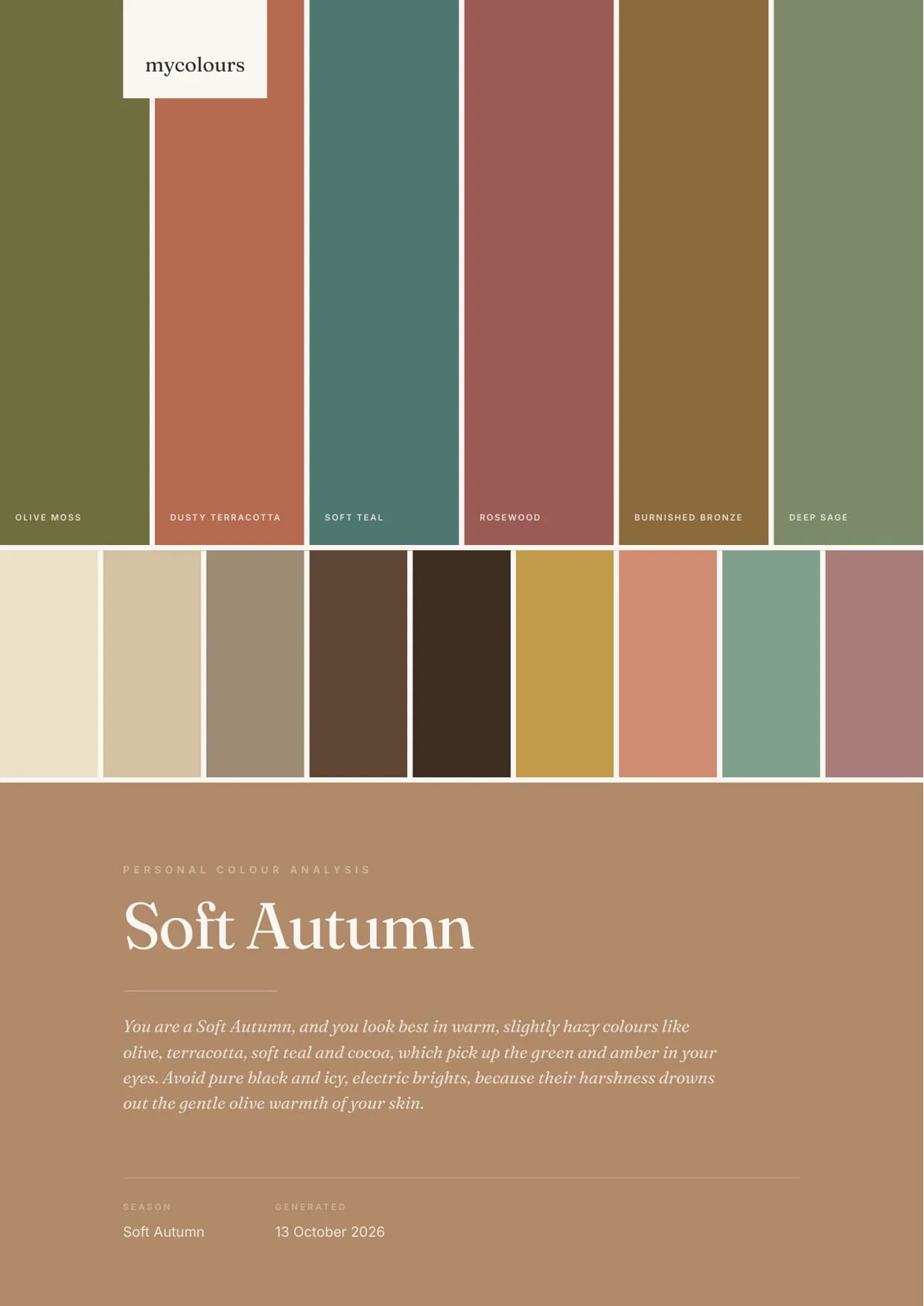
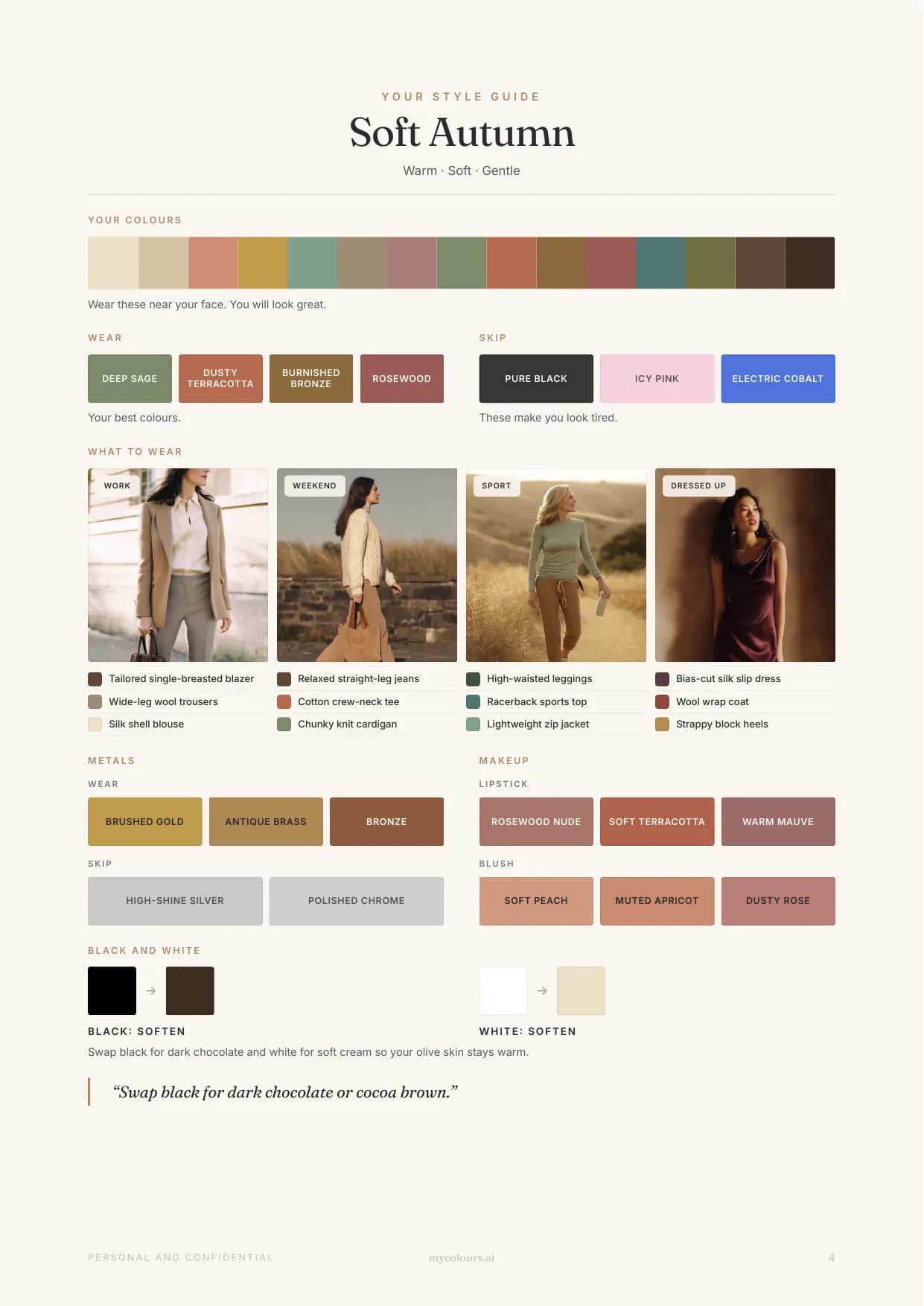
A real report, page by page.
These pages come from a genuine sample report, made by the same analysis that will read your photos. Yours is built from your own two selfies.
- Your season, and why, read from your skin, hair and eyes
- Your 19-colour palette, every colour named, with its code
- Makeup, hair colour and wardrobe guidance
- A PDF report to keep
More on colour

Can ChatGPT do my colour analysis? An honest answer.
General AI tools can explain colour theory, but applying a consistent expert framework to your specific colouring is a different matter entirely.

Is colour analysis actually worth it?
Colour analysis has a reputation problem. Here is an honest look at what it actually involves, what you gain from it, and whether it is worth the investment.

How do I find out what colours suit me?
From the natural light test to professional draping, here is an honest comparison of every method for finding the colours that genuinely work for you.
Your exact colours, from two selfies.
mycolours reads your skin, hair, and eyes and returns your colour season, a 19-colour palette, makeup matches, hair guidance, and a capsule wardrobe in a few minutes, for $9.99.