
What is the difference between warm and cool undertones?
Understanding this one thing changes how you shop, how you dress, and how you do your makeup.
Undertone is one of those words that gets used a lot in beauty and style without ever being fully explained. You have probably been told to "find your undertone" at some point, by a makeup counter assistant, a style guide, or a colour analysis article. But what does it actually mean, and why does it matter enough to be worth knowing?
The short answer: your undertone is the fixed, natural hue beneath your skin that determines which colours work with you and which work against you. It is one of the most useful things you can understand about your own appearance.
What is undertone?
Undertone is the secondary colour that sits beneath the surface of your skin. It is not your skin tone (how light or dark your complexion is), but a colour quality that exists beneath the visible surface.
Think of it like this: two people can have the same medium brown skin tone but completely different undertones. One may have warm, golden undertones; the other may have cool, ashy undertones. Those two people will look their best in completely different colour families, even though their surface skin tone is the same.
This is why general advice like "warm colours suit warm skin tones" is incomplete at best and misleading at worst. Surface skin tone is not undertone.
What does warm undertone mean?
Warm undertone is a yellow, golden, peachy, or olive base beneath the skin. It is the most common undertone globally.
Warm-toned skin looks its best when paired with colours that share that warmth: earthy tones, golden yellows, warm reds, peaches, warm greens, camel, rust. These colours reflect the underlying warmth in the skin and create a glowing, harmonious effect.
Warm-toned skin tends to look drained or sallow in colours with a cool, blue-based undertone: cool greys, stark whites, icy pastels, cool pinks.
Classic signs of warm undertone:
Veins on the inner wrist appear more green than blue or purple in natural light. Gold jewellery tends to look more flattering than silver. Ivory or cream suits better than pure white. When you tan, you tan golden rather than pink or red.
What does cool undertone mean?
Cool undertone is a pink, blue, or ashy base beneath the skin. It is the second most common undertone type.
Cool-toned skin looks its best paired with colours that share that coolness: jewel tones, dusty roses, slate blues, cool greens, muted mauves, cool neutrals. These colours harmonise with the underlying coolness in the skin and create clarity and definition.
Cool-toned skin tends to look washed out or grey in warm, golden, or yellow-based colours: mustard, camel, warm terracotta, golden yellow, peachy tones.
Classic signs of cool undertone:
Veins on the inner wrist appear more blue or purple than green. Silver jewellery tends to be more flattering than gold. Pure white tends to suit better than ivory or cream. You tend to burn or go pink in the sun rather than tanning golden.

What is neutral undertone?
Neutral undertone sits between warm and cool, with neither dominant. People with neutral undertone have more flexibility than warm or cool types, as they can wear from both colour families without a strong mismatch. However, they still have better and worse options within each family, and a full colour analysis will identify those nuances.
Signs of neutral undertone: veins appear a mix of blue-green. Both gold and silver jewellery look flattering. Both ivory and white work reasonably well.
Why is undertone only part of the picture?
This is where most undertone guides stop, and where most colour advice starts to fail people.
Knowing your undertone tells you the temperature direction of your best colours. But temperature is only one of three variables. Depth (how light or dark a colour is) and saturation (how clear or muted it is) also have to align with your colouring for the result to be fully harmonious.
Two warm-toned people can have completely different optimal colour palettes because one has deep, rich colouring that needs depth and earthiness in its colours, while the other has light, clear colouring that needs brightness and freshness. Both are warm. But one is a Warm Autumn and the other might be a Light Spring or Warm Spring.
Understanding undertone is the essential first step. Understanding all three variables is what gives you a complete, usable palette.
The author's perspective
I think the fixation on warm versus cool as a binary has led a lot of people down unproductive paths. I have seen warm-toned people avoid an entire category of colour they would actually look extraordinary in, because they had been told it was "for cool tones." I have seen cool-toned people avoid warmth entirely, when their season actually allows for certain warm-adjacent shades.
Undertone matters enormously. But it matters most as the foundation of a fuller understanding, not as the final answer. The people I have seen get the most from understanding their colouring are the ones who take the time to understand all three variables together: the temperature, the depth, and the saturation. That is when the picture becomes clear.
How do I find out my undertone?
The most reliable method is natural light observation. Take these tests in a room with good natural daylight, with no artificial light interfering:
The vein test. Look at the veins on your inner wrist. Green or olive veins suggest warm undertone. Blue or purple suggest cool. A combination of both suggests neutral.
The jewellery test. Hold a piece of gold fabric or jewellery near your bare face, then silver. One will make your skin look more even and your eyes brighter. Gold pointing to warm, silver to cool.
The white test. Hold a pure white fabric close to your face, then an ivory or warm cream. Whichever makes you look healthier and more defined points to your undertone direction. Preferring white suggests cool; preferring ivory suggests warm.
What comes after knowing my undertone?
Knowing your undertone places you in either the warm or cool half of the seasonal colour system. To get your complete palette, you also need to identify your depth and saturation level, which together with your undertone determines your specific season.
mycolours.ai analyses all three variables from two selfies, assigning your exact season and building a personal palette of 19 colours calibrated to your specific colouring. It also includes makeup colour matches, hair guidance, and a capsule wardrobe. Start at mycolours.ai.
Questions, answered
No. Your undertone is fixed throughout your life. Surface skin tone changes with tanning, ageing, and health, but undertone does not.
It is not uncommon for self-directed undertone tests to produce inconsistent results, particularly for neutral undertones. This is one reason a structured colour analysis is more reliable than self-assessment alone.
Yes. Foundation undertone should match your skin undertone. Cool-toned foundations on warm-toned skin look grey or ashy; warm foundations on cool skin look orange or yellow. The same principle applies to lip colours, blush, and eyeshadow.
No. Undertone is one component of your colour season. Your season also incorporates depth and saturation, which gives you a complete palette rather than just a temperature direction.
mycolours.ai identifies your complete season from two selfies, moving beyond undertone alone to build a full 19-colour palette tailored to your specific combination of temperature, depth, and saturation. Start at mycolours.ai.
Melissa O'Neill
Style Editor at mycolours.ai
Melissa O'Neill is the style editor at mycolours.ai. She started her career on the Paul Smith concession at Harrods, where she learned that the difference between looking ordinary and looking incredible often comes down to colour, not cost. She has since built and run luxury boutique hotels, businesses where every detail, from the linen shade to the lighting warmth, was chosen to make people feel something. She started mycolours.ai because she believes the tools to look and feel your best should not cost £300 or require a stylist on speed dial.
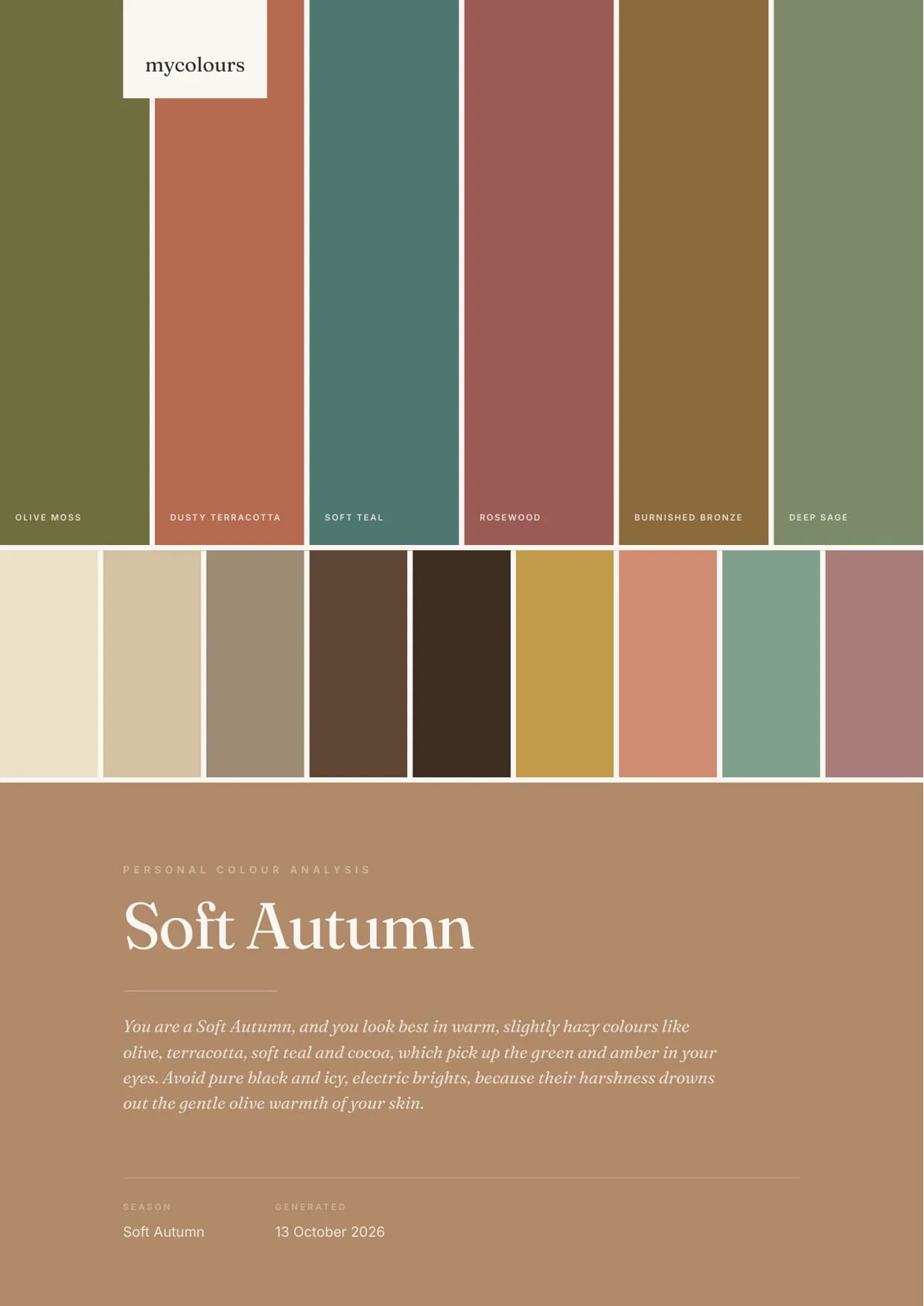
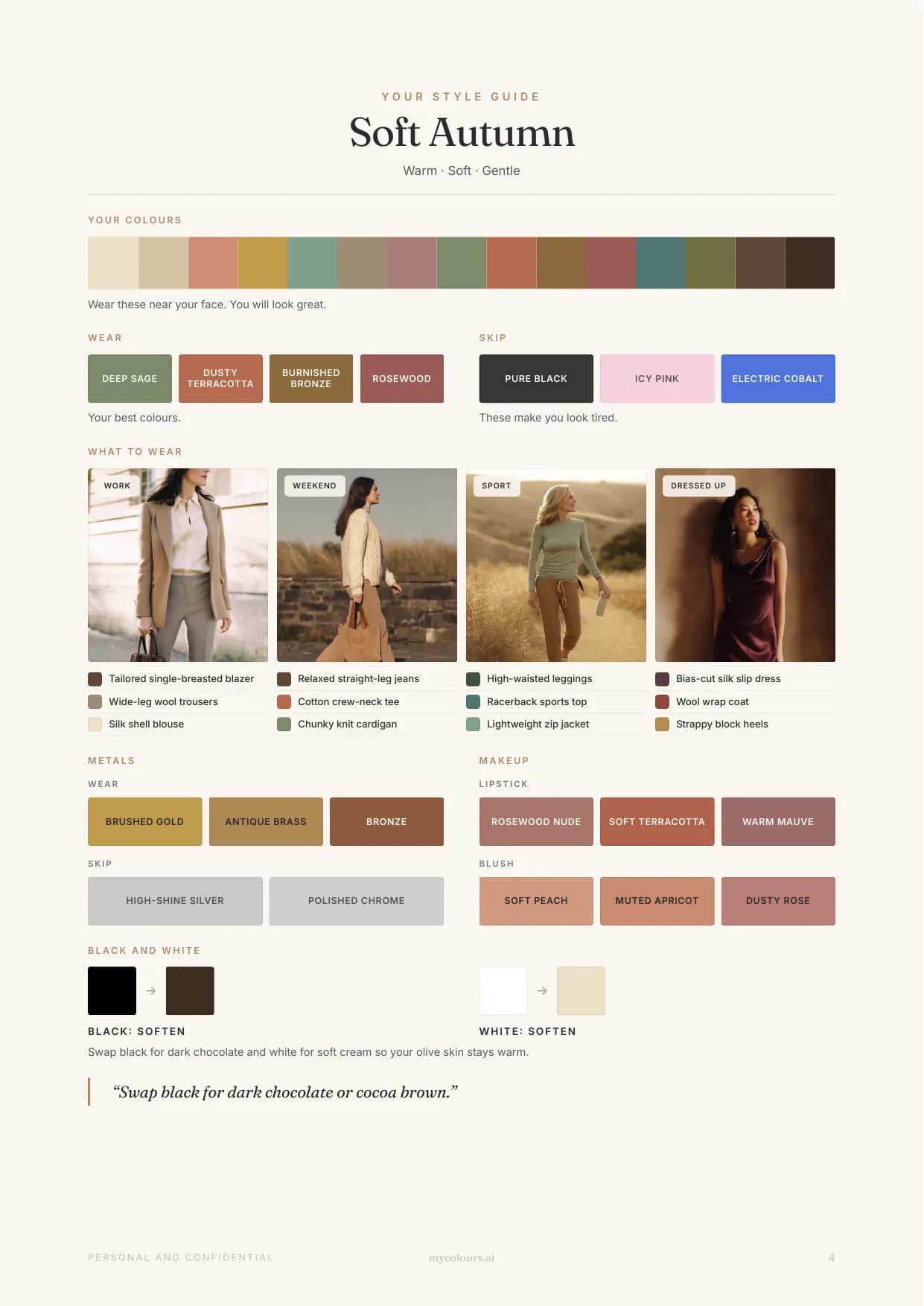
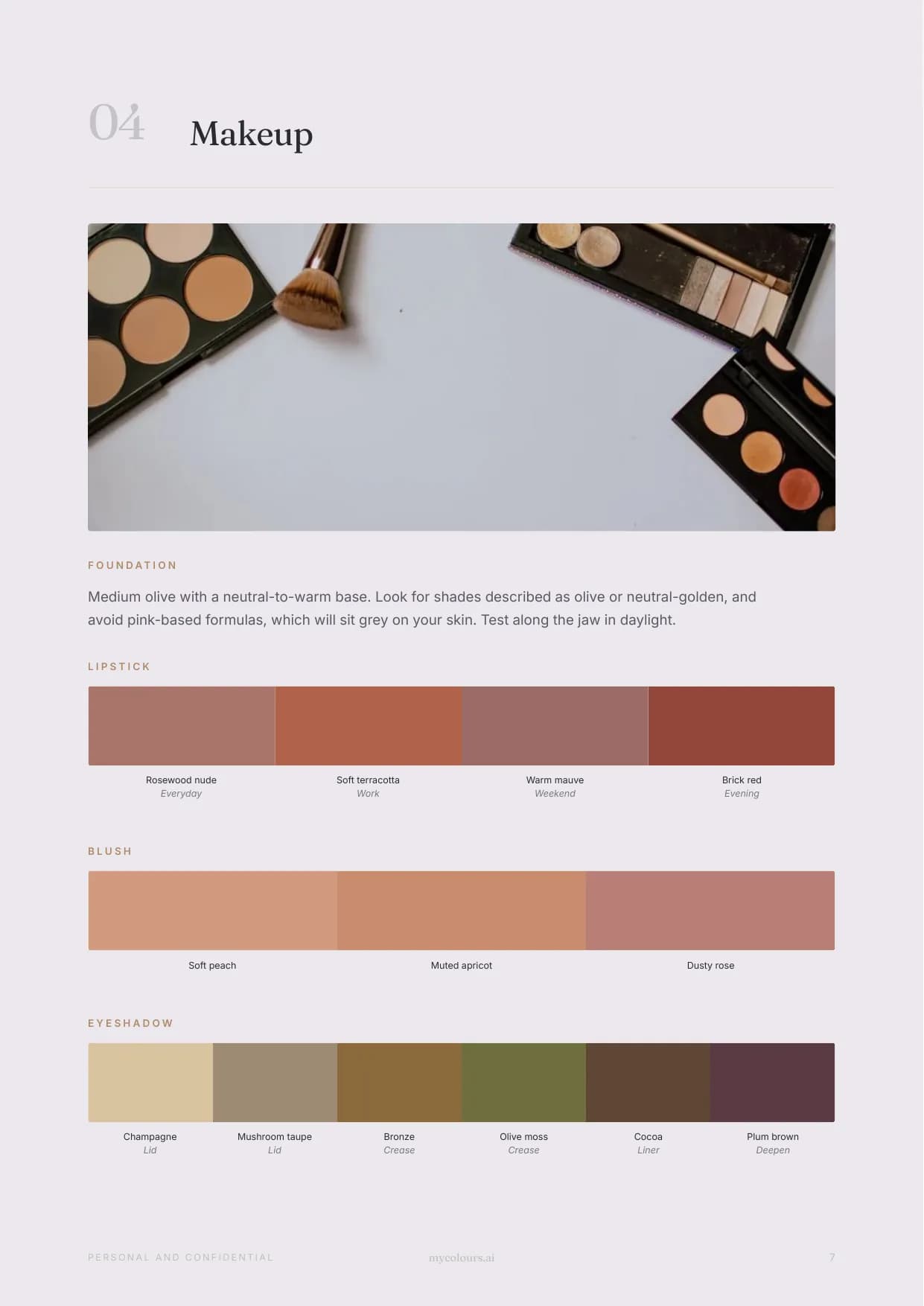
A real report, page by page.
These pages come from a genuine sample report, made by the same analysis that will read your photos. Yours is built from your own two selfies.
- Your season, and why, read from your skin, hair and eyes
- Your 19-colour palette, every colour named, with its code
- Makeup, hair colour and wardrobe guidance
- A PDF report to keep
More on colour

Why do some colours make me look tired?
A perfectly nice outfit can still leave you looking drained. Here is how undertone, depth and contrast decide whether a colour lifts your face or flattens it.

The colour mistake most women make without knowing it
Most wardrobes are built on neutrals that feel safe, but neutrals are not neutral. Here is why getting the temperature of your basics right changes everything.

Why black doesn't suit everyone, and what to wear instead
Black is supposed to go with everything and suit everyone, but for a significant proportion of people it is one of the most draining colours they own.
Your exact colours, from two selfies.
mycolours reads your skin, hair, and eyes and returns your colour season, a 19-colour palette, makeup matches, hair guidance, and a capsule wardrobe in a few minutes, for $9.99.